
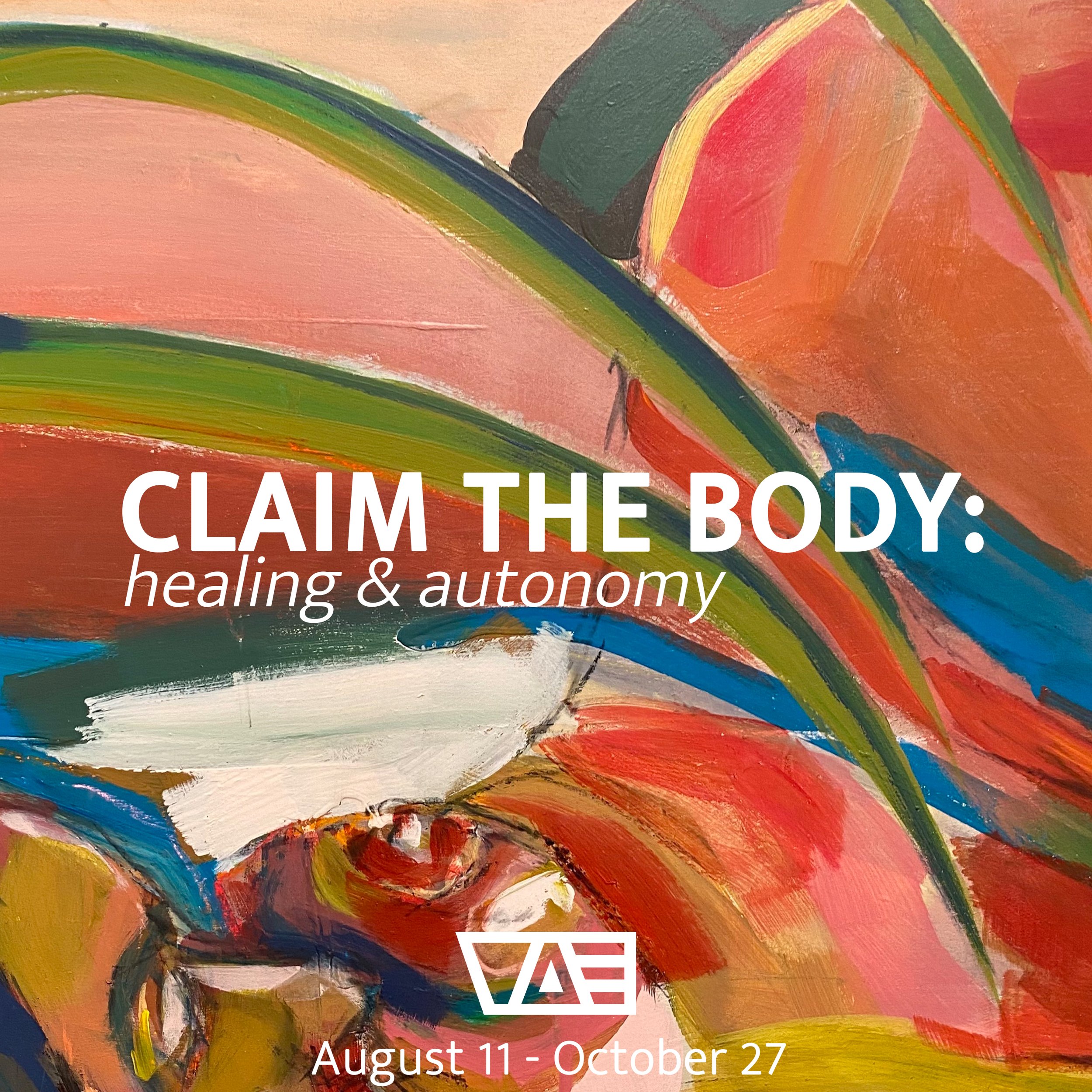
CLAIM THE BODY: HEALING & AUTONOMY

Graphic Image Courtesy of Grey Von Cannon
August 11 - October 27, 2022
VAE Cube Gallery
228 Fayetteville St
Raleigh NC 27601
Claim the Body: Healing & Autonomy comes at a time when discourse related to autonomy is more important than ever. As rights continue to be stripped from the lives of people globally, VAE understands the importance of sensitivity regarding this subject matter. It is not our intention or goal to highlight trauma and disaster, but to instead focus on network building, mutual aid support, and community engagement that can be regenerative and healing.
Claim the Body features work from 8 artists, mostly artists from our immediate local community in North Carolina. We believe that to better facilitate community building and connections it is important to lean into our local community of artists, organizers, and champions of bodily autonomy to foster support, care, healing, and understanding amongst each other.
The ways in which we exercise our autonomy are vast and distinctive. Through dress, body adornment, healthcare decisions and interpersonal relationships, individuals make daily choices about their physical bodies and lifestyles. While some of these decisions are fleeting or aesthetic, they often reflect deeply held convictions, significant deliberation, and creativity. There is power in that.
While bodily autonomy is deeply personal, it is rarely exercised or experienced in isolation. The confidants, abortion care providers, tattoo artists, organizers, doulas, mutual aid efforts, and innumerable others are critical to our choices, advocacy, empowerment, and our healing, both personal and collective. We believe that through practices of personal and communal autonomy, a higher quality of life is possible. The works in Claim the Body speak to the reclamation of the self and the body politic that happens in the struggles for autonomy.
STEERING COMMITTEE
Candace Howze
Cassandra J. Rowe
ARTISTS
Candace Howze - North Carolina
Cara Hagan - New York
Cassandra J. Rowe - North Carolina
Gabi Magaly - Texas
Grey Von Cannon - North Carolina
Jenny Eggleston - North Carolina
Jennifer Markowitz - North Carolina
Julie Rae Powers - New York
PROGRAMMING

SOLD OUT!
OCTOBER 15, 6 - 9PM
Portrait Party w/ Jade Wilson, and Closing Reception
Join VAE Raleigh and Durham based artist, Jade Wilson, for a special program and closing reception for Claim the Body.
About Jade: Durham artist, Jade Wilson, has worked as a professional image maker for the past eight years, spending the first half of that time as a corporate photographer and the other half defying artistic convention and upending the status quo. Their work explores what lies in the shadows behind beauty and sorrow–both personal and communal. Their raw and frequently somber style is illuminated by their Black trans identity.
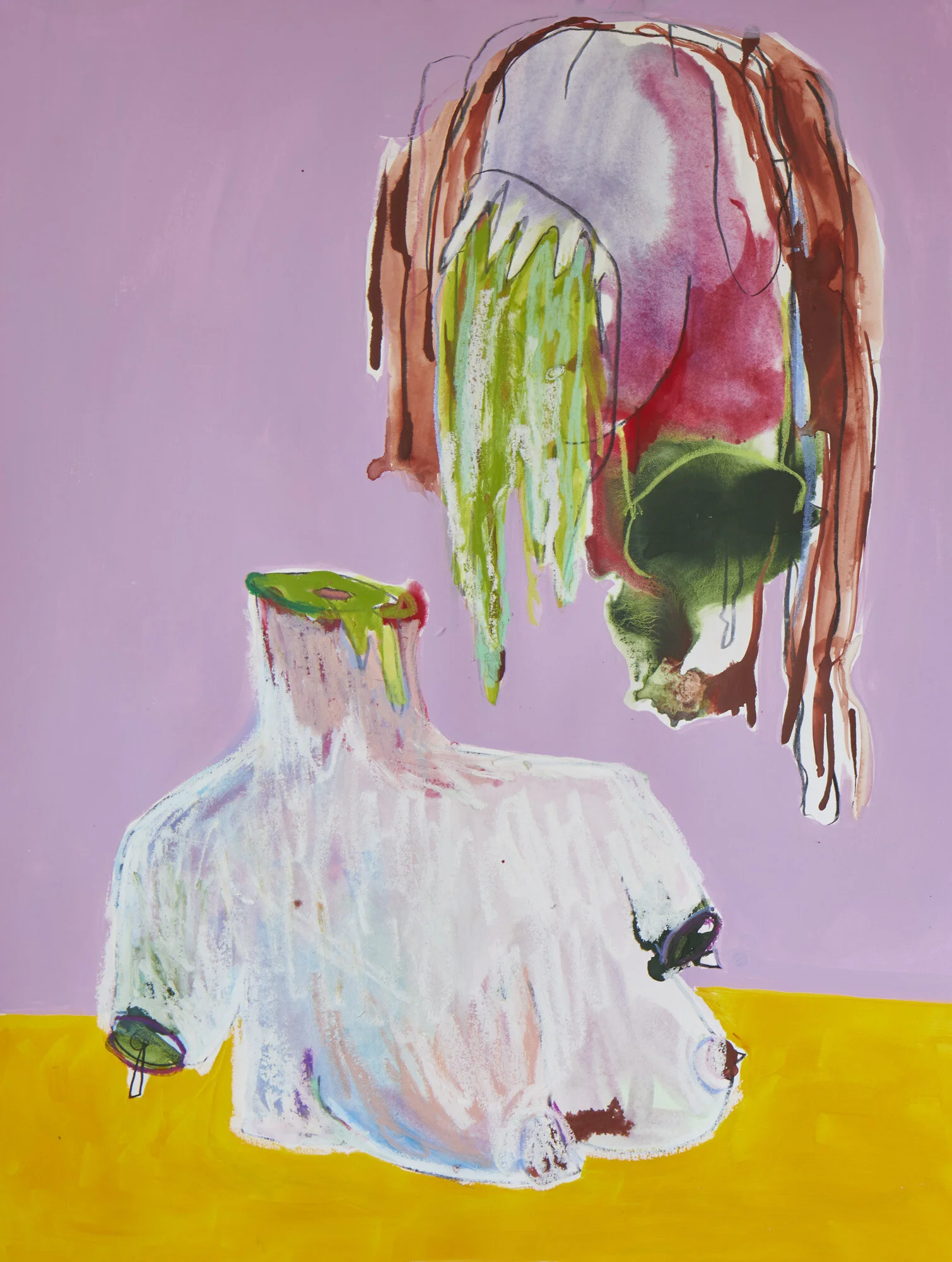
Christine Garvey
Daughters and Saints - Christine Garvey

Daughters and Saints - Christine Garvey
Daughters and Saints is a solo exhibition by interdisciplinary artist, Christine Garvey. Inspired by famous Renaissance paintings - Caravaggio’s Medusa, Parmigianino’s Madonna with the Long Neck, Artemisia Gentileschi’s Judith and Holofernes - Garvey’s colorful drawings re-interpret idealized images of femininity, beauty, and motherhood as inherited from classical painting. As a collection, Daughters and Saints presents a darker, more comical side to these ideals: bleeding breasts, misshapen wombs, self-severing heads, and the angry mouths of children. Through her work, the female body becomes something other than a vessel (The Madonna), a weapon (Judith) or a conquest (Medusa). Garvey presents the female body as powerful and imperfect, but more importantly, as having agency in its own pleasure, pain, and evolution.
Christine Garvey is based in Austin, TX.
On Friday, April 17, I [Ant] virtually sat down with artist Christine Garvey to talk about her Cube exhibition, Daughters and Saints, her process, and her inspirations. We started off by talking about the impact of COVID-19 on Raleigh, Austin TX (where she resides), and on the arts. Christine gave me a tour of her home studio and shared more about the influences behind her exhibition, which had only been open for one week before VAE had to indefinitely shut its doors to the public in the face of the pandemic. Throughout the interview, Christine and I explored and broke down the design of her exhibition, its feminist themes, and how concepts of ruin are addressed through her graphic, yet aesthetically captivating, mixed media drawings.
Interview accompanied by images courtesy of Christine Garvey
Christine So I forgot about all my work.
[shared laughter]
I was like, what is that show about? I forgot. I haven't seen the drawings in a while so I was like looking through the images like, oh yeah, that's what's there.
Ant Yeah, I had to read the gallery guide because I was like, at this point, everything was kind of happening so fast that now it's like, all right, next thing…You just opened your show, it had only been open for one week when we closed, whereas the artists that were in the show in the main gallery, they had been there since January. So for them, we were like, okay, if you need your work back, we'll ship it back to you now. We'll figure it out. But we were supposed to open a new show like a week ago? The first week in April, whenever that was.
C Yeah. So what are you guys gonna do about that? How is that working?
A We just pushed it back. We e-mailed all the artists pretty immediately after we closed and were like, hey sorry. This is the deal, this is what's happening, here is our plan. We're still moving forward with all of the exhibitions that we had planned for the year, maybe with just some minor tweaks or maybe combining a couple of concepts.
C Oh, yeah, no, it's wild times. I'm also part of a nonprofit gallery space here [Austin, TX] and we're trying to curate for the following year. We're like, how do we do this? It's kind of impossible to anticipate things.
A Yeah, it is. It definitely is. It's the anticipation part is pretty difficult. That's what we've been working around at VAE. But luckily, all of the ideas we had for exhibitions for later in the year were loose concepts and didn't have much meat to them yet. It's been really nice for Kyle and I to kind of be able to divide and conquer and do more research and be a little bit more prepared for things when we reopen. What were you working on for that space? What do you do there?
C It's called Mass Gallery, it's in Austin. It is members like...It's an artist collective! It's an artist collective gallery. I think there are like fifteen of us and we have a gallery space in town and we curate shows and we do like public programming and events and things. So before I was a member there, I had a show there and that's how I found out about them. It's a really great space. They bring artists from all over. And Austin has a similar scene to what I have gotten a vibe that Raleigh has, where it's like tight-knit community. It's a smaller city and there are not as many spaces as like New York or Chicago or something, but the spaces are really invested in putting quality stuff out.
A So what was happening there, and in Austin, right before everything shut down?
C We were curating a show. Oh, we had SXSW. SXSW was supposed to be happening.
A Oh yeah, yeah, yeah!
C Yeah! So all of that shut the city down and that had a huge effect on the economy of the city because a lot of money is brought in by SXSW. Now we're just improvising with the time we have. I think they're just going to push some of our exhibitions back and I think some of it's going to just be online.
A Yeah, I completely forgot that SXSW was supposed to be happening literally like right as all of this started. That was kind of one of the first big things, I feel like, to be shut down.
C True. I think we were all shocked, but it made sense because if they did not cancel it it would have brought so much potential spread of the virus to the city so it was a huge public health risk. So yeah…I thought an interview would be fun to do, especially with your background with curating and it sounds like you do so many different things, so I thought it would be kind of fun to talk about the show.

Installation shot of Christine Garvey’s exhibit Daughters and Saints
A I definitely am interested in your process…So I want to talk about the wall colors that you chose to paint the Cube (lavender and light green). I see some samples behind you. Are you in your own studio?
C I am! I feel very lucky to have my workspace in my house, that's been nice. Yes, it was my color testing for the show, which now I need to paint over. And it is funny to see this, the purple, because it does look like a big penis, weirdly.
A [laughs]
C I'm Skyping people and I'm like, I need to paint over that…
So I would say that I'm an image-maker, you know that is more how I might define myself. I was making sculptures last year and then kind of hit this wall where the feelings that I wanted to create and the installations that I wanted to create, which had a lot to do with the body and seeing the body as this thing that could come apart and put itself back together, how to experience the sense of ruin and the cause of pleasure in ruin, and I thought that feeling of ruin was going to be best experienced through materials. So I started making objects. I started using hair and using tar and spray paint and all of these really tactile things. That was a hugely generative work and time period for me.
This past Fall I had a lot of stuff going on and all I really wanted to do was to sit, and I wanted to draw, and I wanted to draw in one place, and I wanted to copy classic images or paintings that I had always really been drawn to. I have a long history with Italy, I studied abroad in Florence and studied Renaissance art. I did a Fulbright there in 2015 where I was looking at and studying Renaissance painting and working at these technology museums. And so I have collected all of these books of Renaissance painting and I just wanted to kind of like, sit with them. I wanted to observe how motherhood was being presented in these books, thinking about motherhood and like the expectations of motherhood and kind of that pathway of being a mother and what that might look like.
All I did in this process when I really needed to kind of get my footing and ground myself, was to copy these images. So I would sit and I would look at, you know, these Madonnas and Child and I would copy them, or I'd start to look at more grotesque images like Judith and Holofernes, which is really violent, and I would copy it. Or I would look at Parmigianino's Madonna With the Long Neck and I would copy it. And there is something, you know, in my creative process where through copying, I'm able to really internalize content and then make it my own and reinterpret it in a different way. It's really kind of fundamental process of how I learn.
So that was like the place of where the drawings came from. I often use color in a really funny way, kind of similarly to when you see these Renaissance images of Judith and Holofernes, or the Medusa…They’re images that are, when you look at them, they're really compelling because they're so well-made and you're like, wow, I just want to continue to look at that. It's so captivating, but the image itself is really troubling. The subject matter is really troubling or the violence of it is really troubling. And so as an artist I'm super compelled by that push and pull of the wanting to engage with something and in that process of being drawn in by something that might be really, you know, enticing, you're confronted with something that's also really problematic. I love the poles of that and the way that I engage with that is through color. When I make a work my color palette is really lively. It's really kind of sugary or fun, but oftentimes what I'm rendering is something that is troubling in some way. Because the color has a language of its own, it really undercuts that trouble in a way that I find really interesting. So a lot of times people will look at my work and they'll be like, “I would be so freaked out by this if it wasn't for the color. I would feel troubled by this if it wasn't for the color.” And that to me is really interesting because you don't exactly know where to place yourself. There's an element of joy and celebration in this topic of ruin, you know, or self severing or destruction, which is oftentimes what I am depicting, you know?
A Obviously, the colors of the gallery, I think, are very much so informed by the colors in the works themselves. The arch shapes that you chose to paint on the walls, they call upon Gothic architecture and architecture from the Renaissance and what we see in paintings from that time, too. So, would you say that the color scheme for the gallery walls was first informed by the colors in your paintings and then the shapes of the arches on the wall came from the more historical context of the works you were looking at?
C Yeah, and I wanted to create a temple of some kind. I think that kind of came from the images. The name of the show is Daughters and Saints, so it's like taking a look at these characters who I think are oftentimes flattened. When we think of Madonna and Child we don't think of it with any sense of specificity. It's like an archetype. So I'm taking that kind of archetype and presenting a more nuanced representation of it, whether that is making the Madonna seem kind of ghostly, or monstrous in some way, but also really ethereal and beautiful in her own right while also presenting kind of a tense relationship between the child and the mother. I took all of these images and I recreated them and I wanted to create a temple that could hold them in some way. So, when you walk into the space it doesn't have that anonymous feeling of like, a white gallery space where you distance yourself from the work. You are invited into an environment that feels in the spirit of the images themselves and the colors that are being used. It was really hard to choose colors in some ways because, if you think about it, you know, the arches, we get this feeling of it being a temple or a church or a place that has some type of pattern affiliated with it. But if I picked blue or if I picked red or if I picked any of these things, the associations we have with those colors can are really strong and that might pull us in one way or another. So I wanted to pick colors that synthesize the work and the range of the colors in the work, but also felt like you didn't have a direct connection to the Renaissance, like a navy blue or a pink. [Lavender and light green] are kind of unusual colors that you wouldn't see in a cathedral, right? So it has that kind of blend of cathedral and carnival, which is where my work kind of situates in a funny way. So that's how I thought about it. It also is the quantity of the color. So you'll see I had to paint the archway, or a version of it in my studio, to really understand what's going to be the impact of that color when it's painted in a space. How does that color feel in space? I was really happy with how it came out.
A Yeah, I really love the two colors you chose. They work beautifully together. I've seen that gallery painted a lot of different colors and I think that the two you painted are probably the best colors that I've seen in there. I think that gallery wall paint colors are a huge debate when it comes to the art world and a lot of people feel very strongly about the whole idea of the white cube.
C What do you think about that?
A I...I don't know. I kind of, I feel like I stand the no-man's-land because I've seen some shows, like yours, that are painted beautifully, but then I've seen some shows where the walls should have just been white. I saw this show not too long ago and they had painted the walls pink. It was the softest shade of like, baby girl pink you could imagine. But it just looked gray. When you put the gallery lights on it it just washed it out completely and turned to gray. Wasn't a great application. At the same museum there was a different exhibition on postwar art from Japan, which was a cool perspective because, you know, we spend so much time seeing American art from the postwar period, that’s what I study so I'm a little bit partial to it, but the show, they had dark gray walls and then all the pedestals had like these modernist steely objects on them. So everything was just like one shade of gray. It was a very fittingly modernist color palette, you know, but very hard to see the piece and take it in. That's the whole reason we love the white wall, it doesn't distract from the content and we can kind of view it objectively. Yeah. You know, I don't think there's anything wrong with one side or the other.
C It's risky! I had a show where I had a wall that was pink and the first shade of pink I painted I was like [screams]! That does not work! You freak out a little bit because what you imagine in your studio is always going to be different than the space. You're definitely taking a chance.
A Yes, definitely. And I think people expect to see white, you know? Whether they realize the historical context of the white gallery or not, it doesn't matter. But I think it's one of the things that people don't realize is there until it's changed, you know? Until they see a wall in a museum that isn't white, they're like, “oh, wait, that's an option! Wow. Why don't we see more of that,” you know? And I think that a lot of art that is in Renaissance galleries and museums, you know, we get those dark like reds and greens, which I love. Those colors are so passion filled to me, but when it comes to the contemporary art world, I think it can kind of go either way. And I think the strength of the work can help or hinder those decisions as well. So like in your case, where the colors are in the works themselves, I can say, oh, this green is right here in this drawing. I think that's a nice little connection. I like that because I like things to go together and, you know, for things to be cohesive! And your show is!
C And too, I still am like, was that green the right choice? I still think about it. But I think the whole point of having a show is that it's informative. To go back to what you were saying, I'm like, where to go next? Any time you put work out there the goal, or at least for me, is to get more information about it, about what it can do. So if I picked colors that I'd already worked with before, for me, that wouldn't have been the most useful. These felt like really risky colors, but I have much more information now to move forward and to kind of push myself to the next thing…And too, [the gallery at VAE] is an unusual space because it is a cube. So like you're moving around it, but that circulation is not really why. You're kind of spinning in place. The archways were another way to create that sense of movement, and to give you a sense of height. It really draws your eye up to look higher.
A Definitely! I mean, after all, it is called the Cube. Before, I know you talked about your study with materials and 3D and sculpture. Had you ever dealt with subject matter like this before in those media? Looking at Renaissance paintings, I mean. I know that you studied abroad and that is a huge part of this, obviously, but did the classic paintings ever come through in your work before in a different way?
C Not specifically. I think I've always been influenced by Renaissance painting and I've admired it, but in terms of directly referencing it, no. I think a lot of the themes in my work have dealt with ruin, and ruin is such a celebrated thing in Italy, like the celebration of history and destruction and living in that side-by-side in our current world. Kind of like basking in the possibility of ruin. I have always appreciated that about Italian culture and I have seen that theme kind of rise up in my work. This was a way for me to really not just directly digest these images that I admired, but to think specifically about these feminist themes that I wanted to touch upon. In my work before I was specifically working with self-portraiture and I started to copy and model my own body and my own image and I would take that thing apart and reanimate it. A lot of times when I do that in my process, it's kind of to come to terms with the idea that our bodies will inevitably fail us, and that is just a central piece of humanity that we all have to deal with, especially in these moments. When I deal with uncertainty the thing that I always try to think about, specifically with this pandemic especially, the thing that I always try to come back to is the truth that I know. I think when I reference the body and what it can do and what it can't do, and specifically the female body and how it's been represented as an instrument of other people. For example, Caravaggio's Medusa, and the legacy of Medusa and how her head was cut off and used as a weapon to destroying things. Or Judith and Holofernes, Judith was used as a weapon, an instrument of destruction. In all of these Madonnas and Child where the female body is like a vessel for somebody else to use... I think in drawing all of these images, I could claim that body back and I could make and have a sense of agency in its own destruction and its own pleasure and its own power. So, a lot of the times in my work, the body is being torn apart, but that severing seems like it's coming from within. Self severing versus something that is being forced or instrumented by a male force or an external force. Does that make sense?
A Yeah, that makes perfect sense. That was very beautifully put. The part when you were talking about the Madonna with Child, and you said "the female body is a vessel for somebody else to use," that made me feel a certain way…
C Yeah. I mean, what I think one of the things that I might start researching next is, I love the work of Artemisia Gentileschi. She's like one of the few female painters that came forward from [the Renaissance].
A Oh, she’s great!
C She presents a more complex representation of motherhood because she herself was a very reluctant mother. And her story is really troubling…She was the daughter of a painter, so she had a lot of like access to learning how to paint in the community. And then she was raped by her tutor and then put on trial and tortured when she was on trial, and then married off in order to legitimize and make it okay that she was raped. And then she was a very reluctant mother, at a young age. She has a really hard story. So, she has these images of motherhood where it's a mother breastfeeding and her breasts are bleeding and she's so disconnected from her child. And I think, where does that story fit into this? How can I bring some dimensionality to that story? Where does the violence, where does the disconnection, and where do the kind of troubling aspects of early motherhood, where does it sit in all of this? I'm looking for that in some way through the body and through how I draw or recreate these images.
A Yeah, absolutely. So…
[long pause]
A ...I just need to sit with that. That was a lot...
C Right now I’m looking at an image of Parmigianino's Madonna With the Long Neck. I love this image so much because that baby is so huge! But also everything is so elongated. So there's a sense of something else that I'm tapping into in a different way, the exaggeration of the body and the long hands, and the long childhood body, it was a way that [the artists] could show their mastery, their understanding of the body and making it work in a composition. But it's also so grotesque, that exaggeration, and I'm really compelled by that. I tried to tap into that in the piece where I recreate it with the really long fingers, the kind of monstrous baby, the disfigured breasts, and the sloppy head coming off of the neck. Yeah, I like to exaggerate that piece of it.
A Yeah, absolutely, and I think that's like you were saying, that it was all about mastery of the body and kind of retapping into those classical ideas. Then you get a painting like Parmigianino's, where we can really appreciate it and we love it and we see it, but you know, it's that little tweaked kind of sense of perfection that I think gets overlooked a lot. I definitely see that in your work, for sure. So, outside of these classical paintings and all of the Renaissance art that you've studied, what other artists do you look at as inspiration, in your work, and just in your life in general?
C Oh, man. I mean, it really changes from week to week.
[shared laughter]
C I've always loved Francis Bacon. He's like an early favorite.
A Oh, yeah.
C I think that he was the first artist I ever really loved. His use of color...and those with space and the body. I've always loved that. I love Kiki Smith as I move more into making images and then making objects. Kiki Smith's practice is so great because wherever the idea belongs she finds the right format, whether it's a sculpture or print. She is so free in where she lets the ideas live and I'm trying to learn how to do that more in my work.
I love David Altmejd. He is a Canadian sculptor based in New York and Montreal, I think. I just like the tactile quality, his use of color, his use of humor, and his pulling the body apart. He makes the body feel like silly putty in a way that's so funny, but troubling.
I love David Shrigley, his sense of humor and that he is not afraid of being silly and dark at the same time. I like people who can swing between, they don't see these things as different states. They see the darkness as enhancing the silliness and with silliness as enhancing the darkness. Art that I don't know exactly how to feel in front of, and that I can feel different every time I look at it, is the most compelling stuff. Art, that doesn't take itself overly seriously, too. I think that is the stuff that I feel most engaged with right now. I think we're in a culture where we take things way too seriously, I don't know if that's even what I want to say, but like it's like we're in this culture of "wokeness" that's just hard as a viewer sometimes to know where to sit and how to engage in a way where you're challenging yourself, but at the same time, being authentic to yourself.
A Yeah, yeah, yeah. I think it's easier to engage when you see those kind of polarities broken down, and I think it makes it easier to sit with the work and be with it. It's you know, it's less, I don't want to use the word aggressive. It's easier to approach, like you said.
C That's where I'm at right now. It's not to say that I don't want to be challenged, but there is a looseness in all of those artists’ work that I find very forgiving.
A That's a great point. Absolutely. Um, so...oh, I just found a typo in the gallery guide. I just caught it out of the corner of my eye.
[shared laughter]
A So you said the idea of the title, Daughters and Saints, comes directly from these paintings. Does that have any other sort of significance to you, or were there any meanings that the works kind of revealed to you while you were making them? Like, things you didn't expect to happen or things you didn't expect to kind of think about?
C Things that the work revealed that I wasn't expecting?
A Yeah.
C Yeah. I mean, like all the time.
A Yeah, I know that was kind of a loaded question.
C Yeah. No, it's a good question. I guess the way the show comes together for me is like you just follow a hunch…you follow a hunch and you do it with a sense of persistence enough and patience that you generate enough content that what is surprising reveals itself. And you get to know yourself better because you sit in front of this work and you're like, okay wow, I just copied all of these Renaissance paintings and their violence, but they're colorful and they are pulling the female body apart and they have kind of a disconnected relationship with other figures in the frame. Like what's happening there? When you've been making art for a long time, you're able to draw everything that has surfaced in connection with a longer thread of themes that have come up in your work again and again.
I think at this point for me and my work, what is interesting is where the drawing and the sculptures fit together, but also these more feminist themes that are emerging in my work. And also my relationship to religion…I was raised Catholic, but I never have thought about that as a part of my art practice or as having any significance there. I think as I kind of dig deeper into hierarchy and the things we revere, and patriarchal systems, and Italian culture, and depicting sainthood, and depicting motherhood, and depicting all these things, I think I'm starting to find where religion fits in all of this. I'm also thinking about how and what I want to subvert about those structures and how I want to separate them. Maybe a piece of that is with this temple that came about is having it be like, what is this as a place? What do we do in a place like this? What do we worship? What do we pay attention to? What is elevated and what is diminished and how? As an artist, I can control that and kind of draw connection to a holy space, and maybe subvert the conventions of that holy space through an installation. So that's a piece of it that's come up.
The title of the show itself, Daughters and Saints, is, I guess I like the word daughter because it implies that you are in relation to somebody else, you are somebody's daughter. You're not your own person, there's a sense of obligation or expectation, or “belongingness," in the word daughter that I feel in these images and looking at them as being like, they are women that are of other people. And then Saints, I guess I see that word as something that's more autonomous, or your power comes from within. I like that kind of the push/pull between those two words. It is what makes them different. You know, one is human and one is other worldly. And how do they coexist?
A No, I definitely have the same attraction to the title of that show for that reason. Yeah, that was another good answer. I'm glad that you touched a little bit on your relationship to religion because that was another thing that I was going to ask about. Your exhibition definitely has a very heavy Catholic feeling.
C Does it? Okay, interesting.
A Yeah. Well, I think so. I mean, I definitely identify more with the pieces that look at the Greek examples. I mean, obviously, all the paintings are Renaissance Italian paintings, but I love the ancient classical allusion, that's one thing I look at a lot in my own work. I spent a long time studying Hellenistic art and Greek sculpture, and spent a lot of time doing alt process photo work where I was kind of tuning into those personalities of heroes and legends in similar kind of ways in which you're mining in your own territory. So I am always interested in how we kind of latch on to these historical figures, whether they were real or not, and kind of self-identify with them a little bit.
C Yeah, totally! It's like an archetype that you get to reinterpret and every artist has their interpretation of that archetype, and I think that's so cool. So it's nice, it's kind of interesting to like participate in that through copying.
A Yeah, absolutely. Absolutely. So once the show closes and the walls are back to white where do you see the work developing after this?
C Yeah. Well you know, right now is a funny moment because I have been thinking a lot about, or at least I try to think a lot about, how what I'm making can be in service to where I'm at. It's a lot about feeling sane and grounded, and like dealing with the repetition of every day, it's kind of all like blending into the next day...
A Amen!
C One big mushy day. One of the ways that I have been dealing with that is through self-portraiture. I've been sitting and just drawing myself. There's something really cathartic about that repetition. I imagine that what might start to happen is that I might start embodying some of these themes through self portraiture. I don't want to speak too soon. Again, like I said earlier, all really successful creative periods for me are when I have a hunch, and I just persist on that hunch and then see what happens. So, right now I'm doing a lot of self-portraiture. I imagine that will blend in with some of the stuff I'm looking at, and then hopefully I will make some drawings that are big. We'll see what happens. And then, if I ever install them, they'll be in some type of installation format. So I like to mix it up so it's not just like a white cube.
A That sounds great! I look forward to seeing how the work develops. I love the installation aspect to all of your work, it’s definitely well thought out and executed.
C Awesome! Thank you so much. It's been so fun to chat with you!
A Absolutely! It’s been great. Thanks Christine, I hope that you have a good day!
C Thanks, Ant! Have a good day! See you later. Bye!


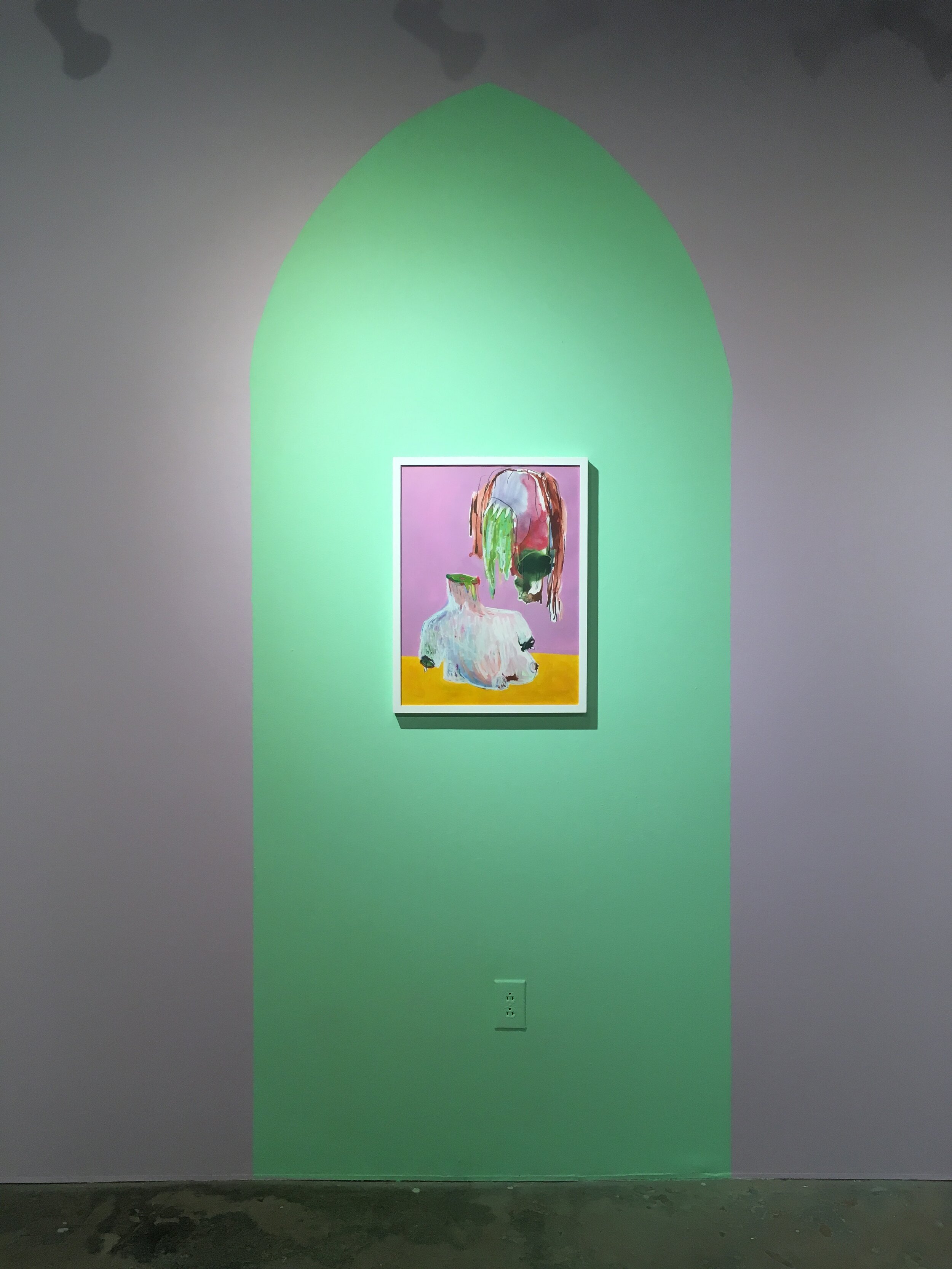


Secondhand Salon - D.J. Neon


Danielle James
January 2 - February 8, 2020
Each mass-produced item in this show was salvaged from the secondhand store or the trash and given a neon facelift. Using the imagery already inside of the painting and through pop culture references, these material mashups bring new creative life into these discarded objects. Danielle’s work provides a commentary on contemporary American consumer and social culture that invites viewers to examine their own habits.
Danielle’s exhibition in the Cube also acts as a two pronged reminder to the artist and consumer alike:
1. So many artists (who are alive and work today) could use your support much more than Hobby Lobby.
2. Mass production of objects and our cultures consumption is most certainly contributing to our global climate crisis.
Danielle is a Durham N.C. based neon bender, artist and metalsmith whose works have been exhibited internationally. She is a member of the all-women neon art exhibition SHE BENDS and is currently a 3rd-year neon apprentice under neon artist and sculptor Nate Sheaffer at Glas neon in Raleigh N.C.
The Cube is sponsored by Celito.net who make it possible for us to pay all exhibiting artists a stipend for sharing their creativity with our community.Celito.net

You thought you are the center of the universe - Jan-Ru Wan

You thought you are the center of the universe
Jan-Ru Wan
August 21 - October 5
ARTIST STATEMENT
Motherhood brought out a different perspective in my life on how we understand love. After the 2016 election, I found even newer meanings about this perspective. The current work was initiated and inspired by my own thoughts through raising my daughter. In a child’s development, I found that it is important to let the child understand the idea of “self” to develop one’s individual identity, but at the same time, it is also important to teach the child about the idea of sharing, and that we are all connected with one another in this universe.
In this world we live in, the idea of white privilege is implicitly embedded in everyday life, either we aware of it or not. Even in Taiwan where I grew up, we had only beautiful white dolls to symbolize the ultimate beauty, and white foreigners were more popular and respected in our little society. We did not know what racism was nor white superiority. This culture was such that everyone thought things were just the way they were; until one day, the perception was broken, we all woke up and we were taught that everyone was created equal, and we all collectively contribute to this beautiful world.
Letter to my daughter in the future: Dear daughter, growing up with you every minute has been the sweetest moments in my life, and we bathe you with all our love. But one day you might learn that someone would dislike you because the color of your skin, or the way you talk, or your gender, or even the name I gave you. That is ok because you are still loved. I hope that, despite these unpleasant experiences in the future, you will still have compassion in your heart, know that the universe is dependent on all living beings. Even though, you are not at the center of the universe anymore, the universe is a much more beautiful and peaceful place when we all lived in balance.
ARTIST BIO
For more than two decades, Jan-Ru Wan has been reusing found objects, especially those discarded from industrial factories, in her sculpture and installation work, re-inventing and elevating their original purpose. Her unique way of incorporating wildly diverse materials with layers of repetition and creating a space of awe is the signature of her installation works.
Throughout Wan’s career, she has participated in 28 solo exhibitions and 44 group exhibitions, including the 1st International Biennial of Casablanca at the Kaohsiung Museum of Fine Art in Taiwan; the Yango-Biennial in Kinshasa, Congo, and her solo exhibition at the Mint Museum in Charlotte NC. Her work has been featured in Surface Design Magazine and Sculpture Magazine, as well as, The National Art Education Association Anthology: Globalization, Art, and Education, which devoted an entire chapter on her work. In 2006, The University of Wisconsin, Milwaukee honored Wan with the GOLD award, recognizing her as the Graduate of the Last Decade. Wan was the recipient of North Carolina’s 2008 Visual Art Fellowship. She has been awarded artist residencies in Taiwan, Thailand, Morocco, Belgium, the Netherlands, and the United States.
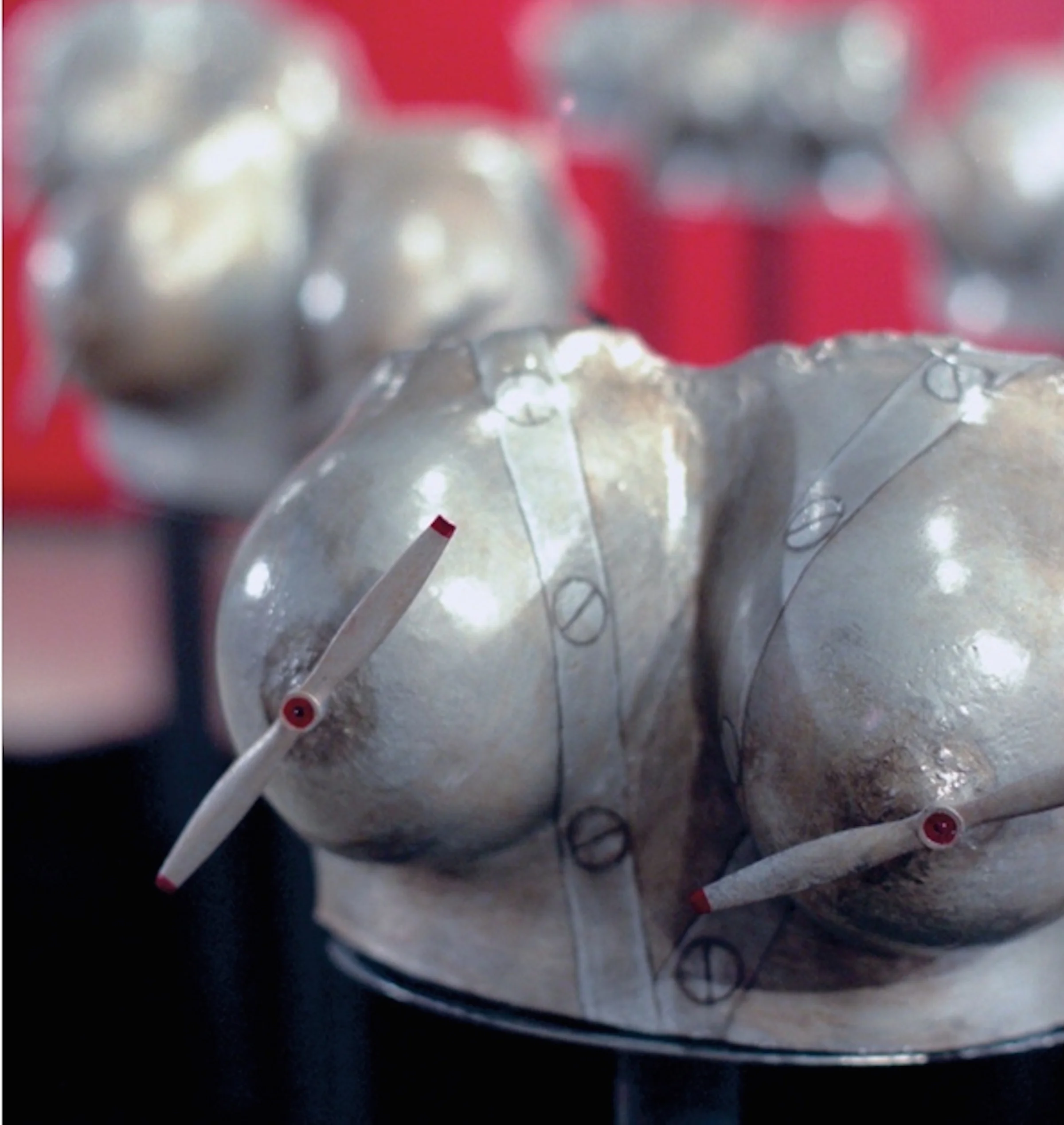
These Things Take Time: Susan Skrzycki

These Things Take Time: Susan Skrzycki
June 26 - August 3
Opening Reception Friday July, 12th 6 - 8 pm
Closing Reception Friday August 2nd 6 - 10 pm
ARTIST STATEMENT
I create art to express ideas and emotions that cannot be expressed by other means. Due to a long love affair with dance, my artwork is often inspired and informed by movement, use of space, lighting and sound. I’m currently working in a series that focuses on vintage theaters and dancers. I’m often interested in everyday objects that tend to go unappreciated beyond their practical purpose, like zippers and lightbulbs. I’ve worked in a variety of media over the years ranging from painting and installation to performance. For the last year I’ve been working with encaustic and am thrilled by the seemingly endless possibilities this medium offers. I find encaustic media to be the ideal conduit for me at this point, as diverse memories and influences are manifested in my new work.
ARTIST BIO
Susan Skrzycki is a largely self-taught Raleigh-based artist working in a variety of media including murals, installation, assemblage, encaustic and painting. Her extensive dance background is sometimes noticeable in terms of movement, dancers as subjects, and kinetic installation. Although each medium, material and subject seem to dictate the style and approach, her work is alive with, light, texture, atmosphere and presence. Susan’s goal is to continue to push the boundaries of her abilities and knowledge while collaborating with others. Skrzycki finds daily inspiration in studying the work and life of Johann Baptist Hofner, her 2x great grand uncle, having recently traveled to Germany to investigate. Susan is currently enjoying the process of earning a Certificate of Nonprofit Management at Duke.
Sifting: Eric Kniss

Sifting
Eric Kniss
April 24 - June 8, 2019
ARTIST STATEMENT
The key concerns in my work have to do with notions of the value of physical labor, the accumulation of material as evidence of time, and challenging prevailing assumptions about material, its uses, and hierarchies of value. I have used non-traditional materials like rope, unfired porcelain pots, and clay dust (industrial Kaolin). I am interested in discovering ways that material might visually reveal (or challenge assumptions of) its own characteristics. This is accomplished by implementing simple but concentrated and repetitive physical activities like winding, sifting, stacking, or compressing, creating contextual surprise as a result of process over time. I am interested in the capacity of physical labor to generate a visceral sense of connectedness to place. The sifting of Kaolin produces a tenuous situation of delicacy and impermanence that creates tension between the embedded sense of investment and the ephemeral nature of the result.
Over time I have become increasingly aware of the performative aspects of my work and have thought long about how to open the process to viewers without sacrificing the solitary, contemplative space necessary for its making. The specifics of the Cube have allowed me to put forward one scenario as a solution. For this exhibition I have closed the gallery space to public view and used video feeds to provide viewers access to the work and the process of its making via TV monitors in the gallery and online viewing options.
The situations described above build on the work I have been pursuing for a number of years, and the use of technology that mediates the viewer’s experience of the work bring new questions into the mix that I find very compelling. For example: What is the ontological status of the object of art in the context of mediated experience? What is the nature of knowledge in an intensely mediated reality?
This exhibition has been funded in part by a Faculty Research Grant from Bridgewater College, Bridgewater VA.
ARTIST BIO
Eric Kniss earned a Master of Fine Arts from the University of North Carolina at Greensboro, a Bachelor of Fine Arts from Bethel College, North Newton KS, and an Associates of Art from Hesston College, Hesston KS. Kniss has been awarded the Joan Mitchell MFA Grant (2010) and is a fellow at the Hambidge Center for Creative Art and Sciences (2015). His work has been exhibited in various venues including the Weatherspoon Art Museum (Greensboro NC), CUE Art Foundation (NYC), Lexington Art League (Lexington, KY) and Staunton Augusta Art Center (Staunton, VA). Kniss teaches a wide range of courses in the Art Department at Bridgewater College, Bridgewater VA.
Carrie Fonder - Cube Gallery
Carrie Fonder - Cube Gallery
February 20 - April 6
First Friday Receptions: March 1 & April 5
Artist statement:
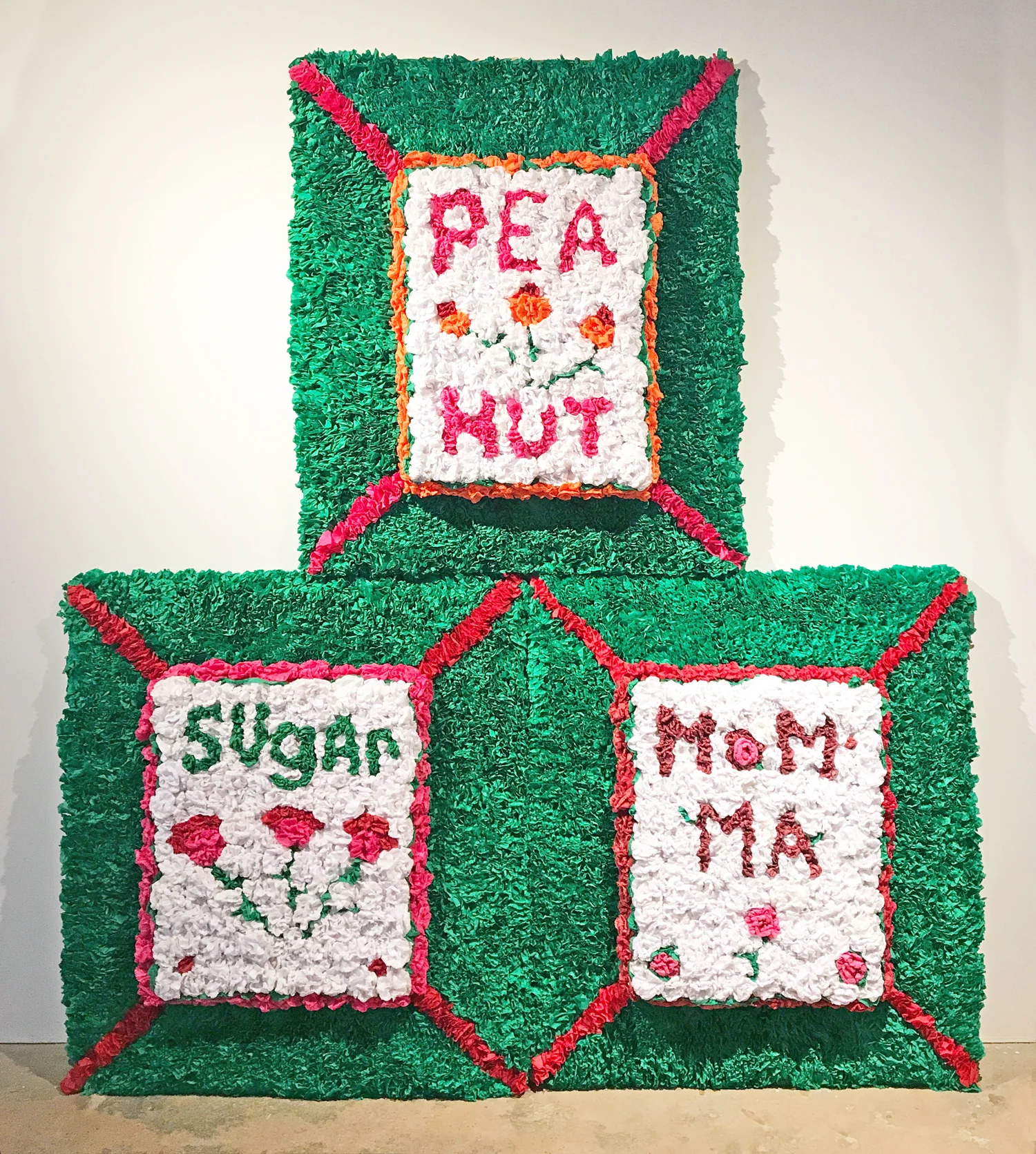
“My mixed media sculpture, video, and two-dimensional work uses humor to play with issues of power, and complicity. It highlights trade-offs of power—some willing, others coerced— suggesting a complicity that reveals our conflicted relationship to power. The work revels in a material frivolity fueled by kitsch material choices that belie the depth of content. With a wide range of influences from art to gender politics, I use humor to explore culture.”

February 20 - April 6
First Friday Receptions: March 1 & April 5
Artist statement:
“My mixed media sculpture, video, and two-dimensional work uses humor to play with issues of power, and complicity. It highlights trade-offs of power—some willing, others coerced— suggesting a complicity that reveals our conflicted relationship to power. The work revels in a material frivolity fueled by kitsch material choices that belie the depth of content. With a wide range of influences from art to gender politics, I use humor to explore culture.
Formally, the work moves between two and three dimensions as it investigates the slippage between the real and the fictive. For example, a kitschy airbrushed portrait on a carved form orb confuses the dimensionality of Mike Kelley’s face in Portrait of an Artist as a Dead Man, while stickers of wood chips make a paper-mâché form appear to be carved from strandboard in Paradise Redux. My often-kitsch material choices indulge a self-conscious surface silliness that invites a multi-layered reading of my work. Carved foam, welded steel, airbrushed portraits, and latch-hook rugs are all worthy carriers of deeper meaning.”
About her Cube exhibit:
“For my Cube exhibit I have developed a project I began at the Wassaic Project in New York. The work included observing local goats in the creation of a video and emerged from a Fulbright Nehru grant period spent in India. While observing the goats in India, I was taken by the ability to rise above--quite literally. For Cube, I will create a multi-channel video and sculptural installation featuring footage of a piñata party I hosted for several goats in Wassaic. The party featured a goat-shaped piñata made entirely from vegetables and an Olympic medal style stand. The installation will feature a large-scale version of the stand, the sides of which will function as video screens, as the form itself acts as a monolith dedicated to achievement. The space surrounding it will be decorated with medallions and sculptures made of carnations. The carnation pieces conflate the tokens we get for winning with those we get in death. The carnations will be allowed to dry out and ultimately die through the exhibition, furthering the arc of the works experience.”
Notary Public - the LAB
Freshly Squozen
Notary Public
January 4 - February 23, 2019
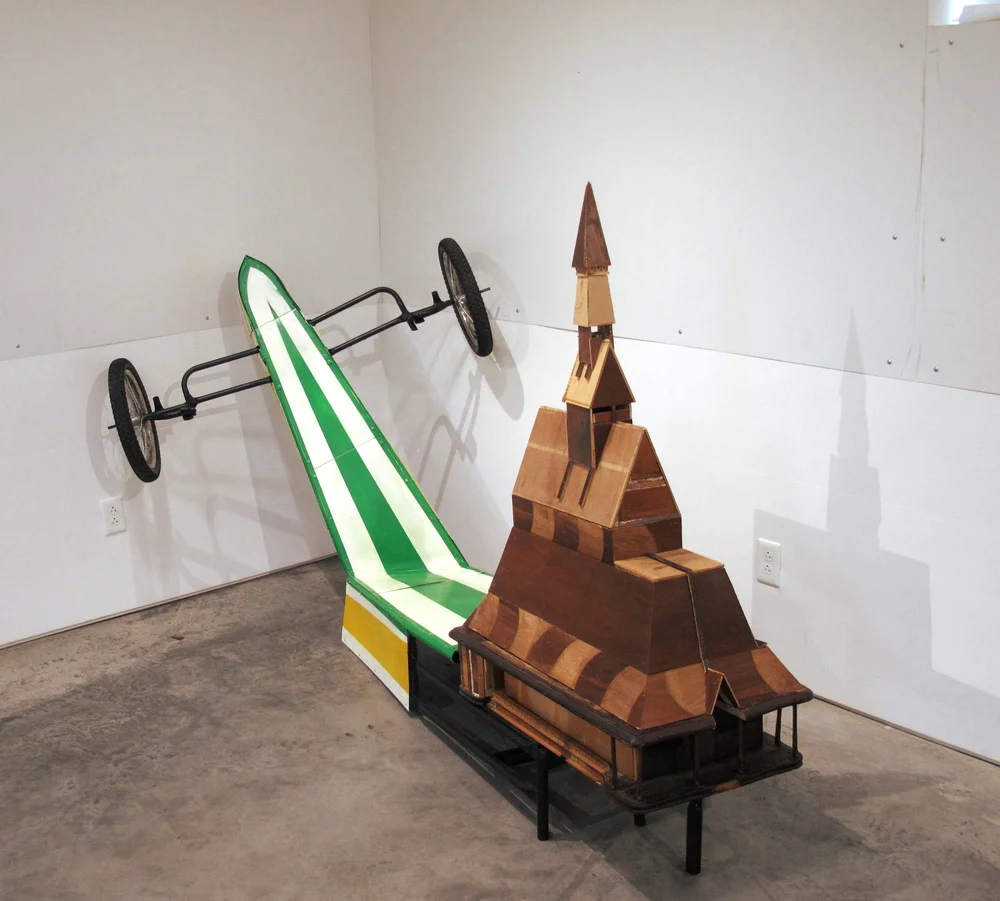
In January and February of 2019, Notary Public will team up to create an installation of drawings, objects, and video in the Cube.

Freshly Squozen
Notary Public ft. Warren Hicks
January 4 - March 29, 2019
In January and February of 2019, Notary Public will team up to create an installation of drawings, objects, and video in the Cube.
Notary Public is an artist duo consisting of Jeff Bell and Megan Sullivan. Jeff and Megan have been collaborating since 2015 on work that incorporate aspects of each of their studio practices into new sculptures neither would make alone.
During the month of January, you can see the artists working within the space of the Cube on their new pieces. Their presence will be erratic, much like their studio practices as they juggle working for separate non-profit art institutions, raising their respective children, and nurturing several bad habits each.
The end product of this particular collaboration can be seen in the LAB from March 1-29, 2019. There will be a First Friday reception on March 1.
Stacked - Yvette Cummings Arendt
Stacked
Yvette Cummings Arendt
October 24 - December 8, 2018

Stacked
Yvette Cummings Arendt
October 24 - December 8, 2018
ARTIST BIO
Yvette L. Cummings received her Masters of Fine Arts degree at the University of Cincinnati’s School of Design, Art, Architecture, and Planning. While still enrolled at DAAP she was director of the 840 Gallery, interned at the Contemporary art Center of Cincinnati, and was the recipient of the Wolfstien Travel Fellowship to Spain. Following her graduate work, Cummings became an instructor for the University of South Carolina Department of Art. She was awarded the Stephen J. Dalton Teacher of the year from USC University in 2011. Cummings is currently a Teaching Associate at Coastal Carolina University in Conway, South Carolina. Her work has been exhibited in multiple group and solo exhibitions throughout the south and midwest. In 2013 Cummings collaborated with James Arendt to participate in Free City Public Arts Festival, Flint Public Arts Project: Chevy in the Hole with their socially engaging installation titled “Righting Itself”. Her work can be found in both public and private collections and has been featured in the 701 Center for Contemporary Art 2015 South Carolina Biennial in Columbia SC as well as Contemporary South at Visual Art Exchange in Raleigh, NC. Cummings was Most recently the recipient of the 701 CCA Prize 2016 for South Carolina artists under 40. Yvette L. Cummings currently resides in Conway, South Carolina where she devotes her time to her studio work, teaching, and family.
ARTIST STATEMENT
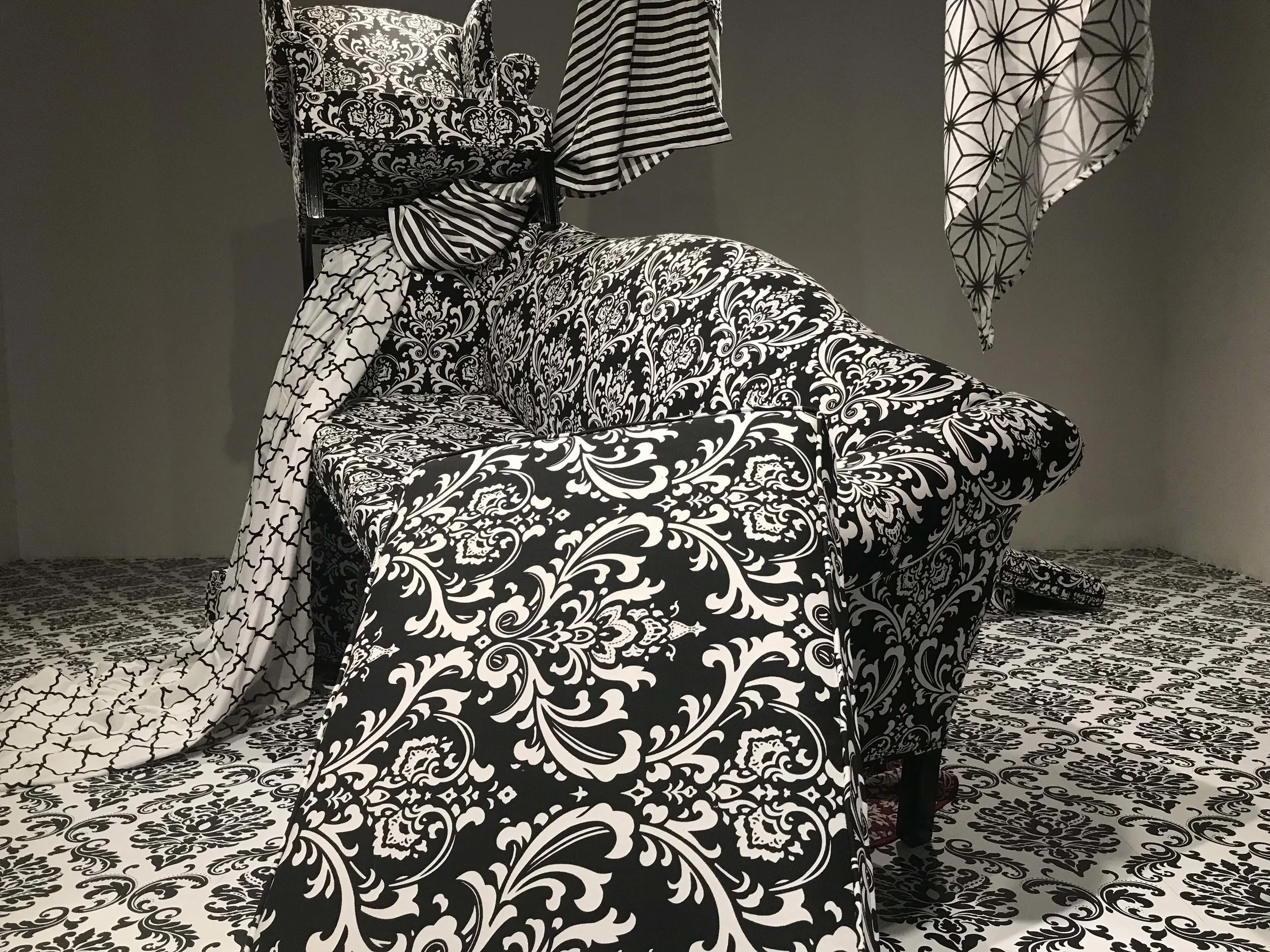
This work presents a moment of transition between experiences of recalled child abuse and the dynamics of motherhood. I am interested in exploring the relationships my daughters have with one another and the complicated path of youth, beauty and femininity. Girls are constantly told how they should present themselves and are held to an innocence that gets twisted in the adult gaze. Beauty is seen as trouble, but girls are expected to be beautiful. As I have watched my daughters in their youth, I reflect on the trouble that was brought to me as a survivor of child sexual abuse. The scattered memories of my experiences echo in the awkwardness of traversing out of childhood and into self-awareness.
The struggles of adolescence include navigating the dynamics of family, sibling rivalry and rapid transitions into adulthood. I depict my daughters during these times in relation to one another, and with myself. The narratives present overt physical strain and gesture to relay the message of conflict. My eldest daughter repeatedly confronts the viewer with her gaze. The compositions are purposeful in the postures of the girls. They are representing their age, but we feel voyeuristic in our participation.
I use damask and floral patterns to flatten the spatial aspects of the work. These very traditional, elegant patterns create a visual abstraction and represent the confusion that occurs over time and space. The figures are pushed to the foreground, making the viewer confront them leaving nowhere else for their eyes to go. The figures, in contrast to the patterns, challenge our role in the gaze we place on adolescence and the expectations that come with beauty.
Holly Wong - Mind/Forest
Holly Wong
Mind/Forest
August 22 - October 6

Holly Wong
Mind/Forest
August 22 - October 6
ARTIST STATEMENT
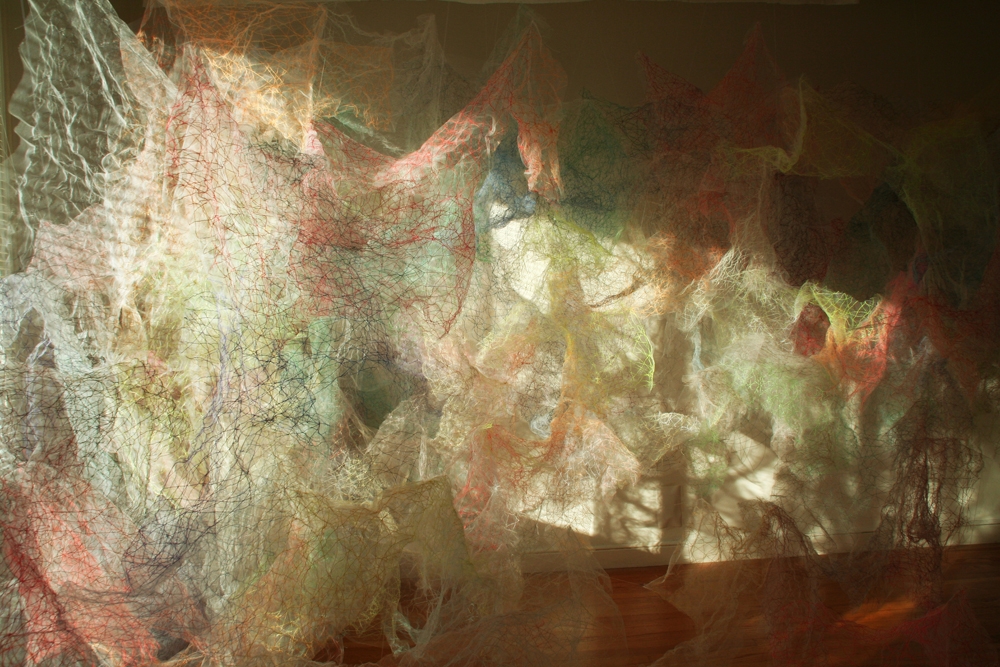
When considering the physicality of the body, it brings up feelings of weight and pressure but yet a counter balance of elusiveness and lightness. My work is a constant process of assembling, deconstructing and then making whole once again. The intent of this work is to visually express the nature of though, how thoughts move in our brains, and how thoughts may concentrate or synergies into patterns as demonstrated by the networks of thread.
I create installations that address the subtle and ephemeral nature of psychological states. through the action of sewing, I build and construct and then by cutting and resewing, structures are reconstructed again. It is very much the way I feel about the process of life. It grows, becomes, falls apart sometimes because of our own actions, and then there is the attempt to repair. But yet in the process of repairing, we become stronger than before.
ARTIST BIO
Holly Wong is an artist who lives and works in San Francisco, California. She was educated at the San Francisco Art Institute where she graduated with a Master of Fine Arts with a concentration in New Genres. Holly creates installations and photographs, integrating non-traditional approaches with more traditional sewing techniques associated with the history of women. Her approach is both non-conventional but also deeply rooted in her history and culture.
She has been awarded visual arts grants from the Barbara Deming Memorial fund, the George Sugarman Foundation, the Puffin Foundation, and a Gerbode Foundation purchase award. She is a Presidential Scholar in the Arts and has had over 50 group exhibitions and 10 solo exhibitions at venues such as the Smithsonian Institute of American Art, the Berkeley Art Museum, the University of San Francisco and the Carving Studio and Sculpture Center in Vermont.
Globe by Leroi DeRubertis

GLOBE
Leroi DeRubertis
June 20 - August 11
Artist talk: Aug. 11 @ noon
ARTIST STATEMENT
Leroi DeRubertis draws small pieces with wire. She assembles them en masse, speaking to both individual and collective humanity.
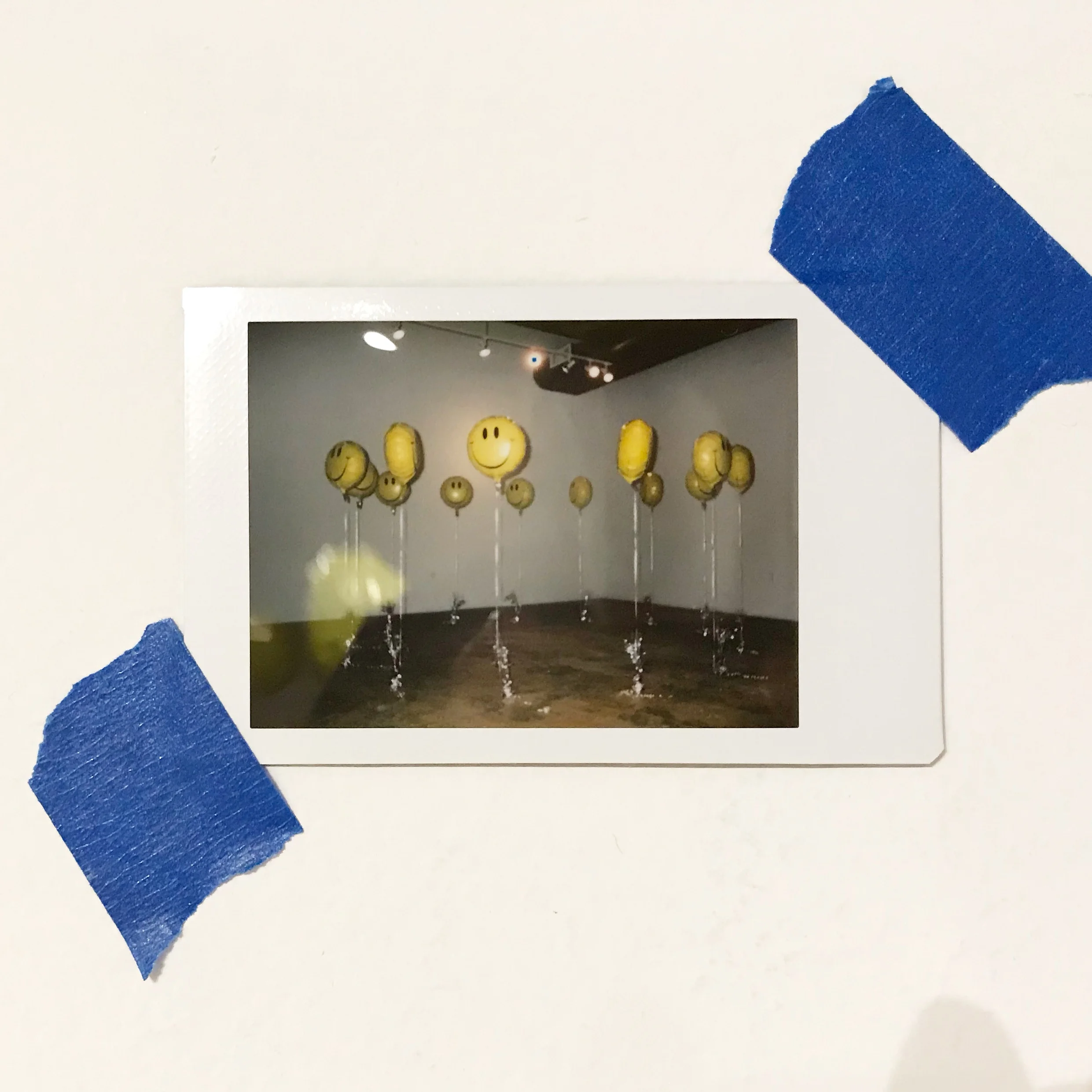
Amy M Anderson - The Clique
Amy Anderson
The Clique
April 25 - June 2
Artist talk - June 2

Amy M Anderson
The Clique
April 25 - June 2
ARTIST STATEMENT
Absurdism describes how we, as humans, desire order, purpose and meaning in life. As a result, we are left unsatisfied by the “silence of the universe” and its unwillingness to unquestionably provide us with such. With no life meaning, there is no point to live. Yet, suicide is also meaningless. This brings us to a position of existence where we are left living our lives with no meaning. The acceptance of this meaningless state of being alive supposedly leaves us existing in total freedom. Through my work, I examine the conflict of the individual’s role and search for the state of freedom in which Absurdism leaves us. (Absurdism)
In our social positions, phantom communities, social constructs, expectations and indoctrinations put us on the stage to play a perceived intended role. In the lifelong universal pursuit of meaning and happiness we find ourselves together on a stage in which we must ask ourselves if we can find truth in the role in which we are playing. By observing and investigating common social scenarios, my artworks induce conversations about social conditions drawing attention to the need for change or at least acknowledgment of the effects of such conditions on and within the individual.
ARTIST STATEMENT
Objecthood plays a vital role in the works I create. My work measures relationships between ideas and environs. The role of the individual object is always put into question through the creative juxtaposition of materials in which objects combine to create new functions. I combine the use of readymade objects with unconventional materials to create an environment that promotes conversation. Recognizable objects create a familiarity concept with the viewer that entices them to further inspect the work.
Through the use of everyday objects and easily recognizable materials, viewers are invited to consider each work, its components and the meaning given to the piece by the intentional combination of these objects and their new functions. By shedding light on the absurdity of imposed social roles, viewers are prompted to ask themselves whether the role they play in life is merely a façade – an act – or if there is some truth in who they are and the potential of who they can become.
ARTIST BIO
Amy M. Anderson is a visual artist who specializes in conceptual sculpture and installation. Amy is a graduate of UNC-Wilmington, obtaining her BA in Philosophy and Religion, as well as Studio Art in 2004, and her Master of Arts in Liberal Studies in 2017 (Thesis: Feeling and Filling Space: A Finnish Art Experience and Gas Station Discos). She has her Master of Fine Arts from Western Carolina University (Thesis: My Titles are Always in Pencil: Projects in The Absurd), and has worked at international artist residencies in Spain and Finland. Amy is currently pursuing her PhD in Transformative Studies at the California Institute of Integral Studies, is an instructor at Randolph Community College and faculty in the Graduate Liberal Studies program at UNC-Wilmington.
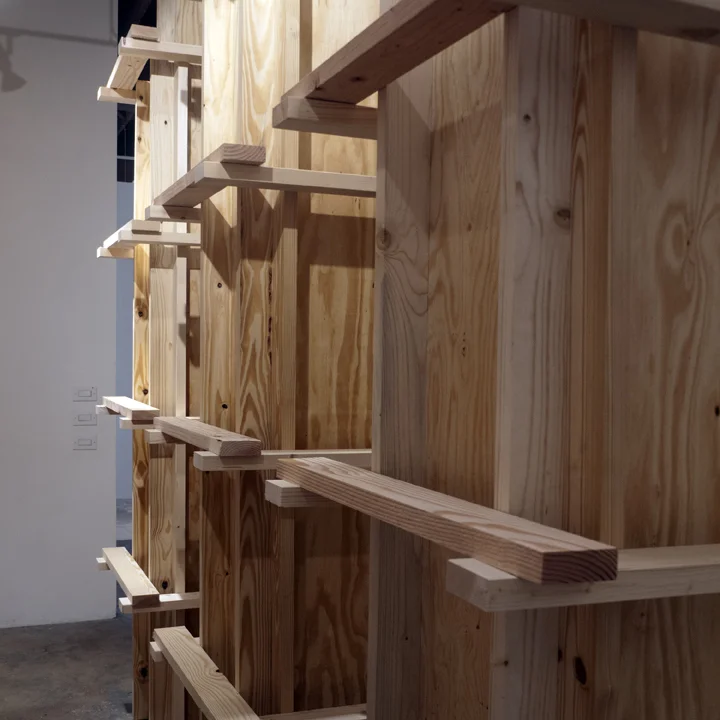
New Urbanism
New Urbanism
Robert Aiosa
February 15 - April 7
Artist Talk - April 7

New Urbanism
Robert Aiosa
February 15 - April 7
Artist Talk - April 7
BIO
Robert Aiosa (b. 1982 Smithtown, NY) earned is his M.F.A from the University of Wisconsin–Madison, and a B.F.A from the University of the Arts in Philadelphia Pennsylvania. Aiosa’s art practice is rooted in the constantly changing urban landscape, and how the transitional state filled with uncertainty can affect our communities. He recently attended the Haystack School of Art and Crafts, Open Studio Residency in Deer Isle Maine. Aiosa recently participated a group show SKYWAY at the Ringling Museum of Art in Sarasota, Florida and Simulations, at Art, Literature + Lab, in Madison, Wisconsin. Aiosa is currently a faculty research associate/head of sculpture production at the University of South Florida’s Graphicstudio in Tampa Florida were he collaborates with leading contemporary artist to produce 3d editions and unique works.
Artist Research Statement
Neighborhood identities are evolving as buildings become renovated and repurposed for new activities and cater to an influx of different class demographics. My work is inspired by this transitional state of limbo filled with uncertainty, excitement, and trepidation. By abstracting the built environment and mixing vernacular, high style and urban planning, with historical and iconic forms, I aspire to showcase the diversity of class that make up our environments. I create these structures with off the shelf building materials such as Oriented Strand Board, Plywood, Pine 2x4s and in techniques that are common to the construction industry as a stand in for the common man, DIY aesthetic and pride in labor, all attributes found in our changing environments.
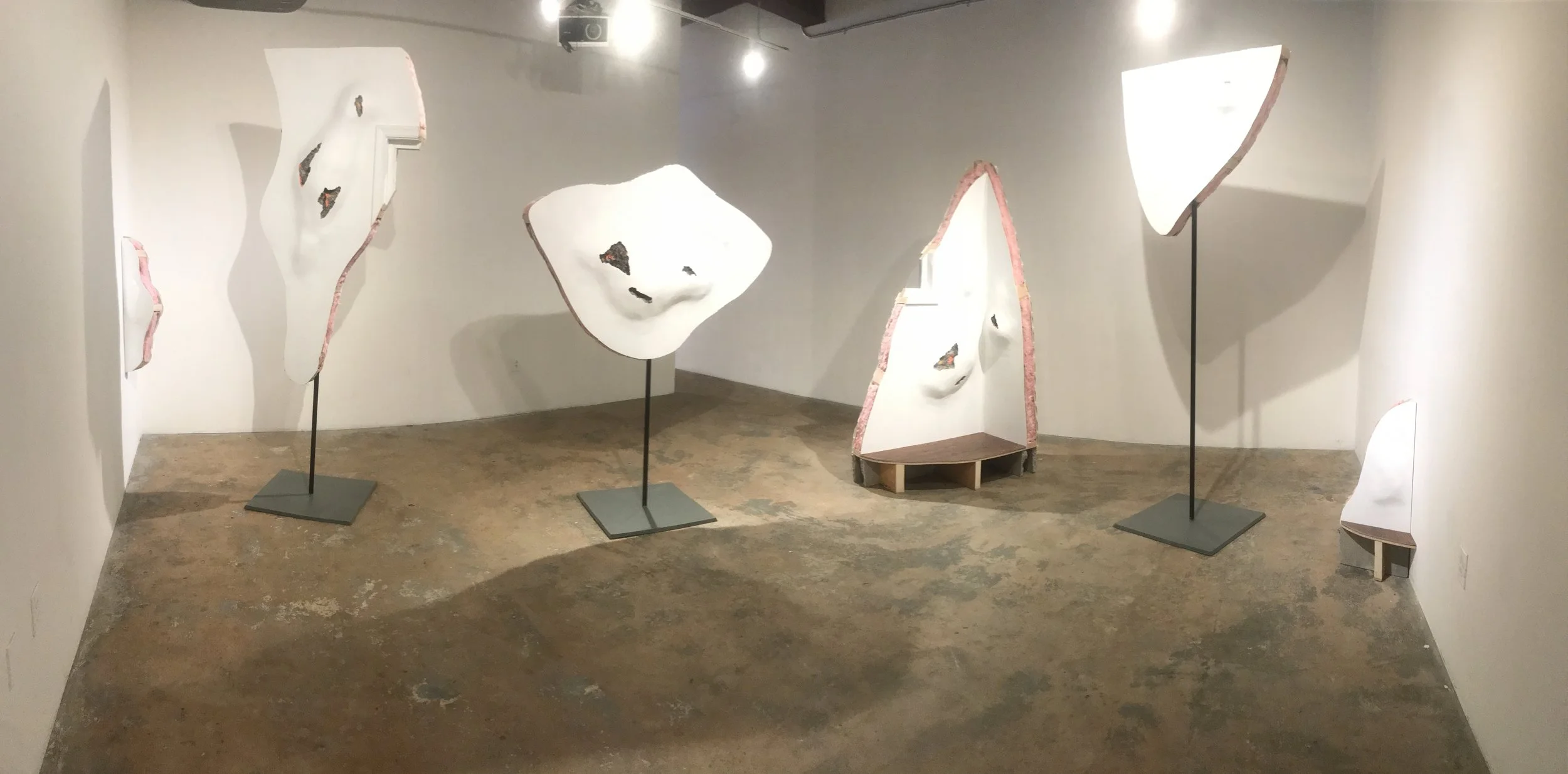
Ron Lambert

Ron Lambert
Living Goodbye
December 20 - February 2
ARTIST STATEMENT:
There are instances when the environment reminds us of our lives, such as the point at the beginning of a rainstorm when you’re not sure if you feel the water yet or not, in extreme weather when our lives are threatened, and also when we encounter something so breathtaking that for a brief moment our lives are taken off course. Art has been given the job of capturing contemporary life, providing mementos of things the culture does or should feel for. Culture moves at an exhausting pace yet it is difficult to make art about flux, to make objects and images that ask the audience to remain still in a culture which constantly threatens to pass them by. As we leave our bodies to move at the pace of progress, we pass the physical parts of life which remind us that we take up space. It is in the moments of the sublime experience that life slows down if even for a second. Art making provides me with an opportunity to explore the sublime through the construction of experiences. Art can mimic life physically; it can also mimic the experiences of life, adding interjections to remind us of the pace at which we live and how one perceives beauty and the aesthetic of contemporary life.
Culture aims its efforts toward a sense of perfection. I see this in how we construct the landscape: by making it manicured we believe it is under control. The more we try to force our environment into submission, the more we are faced with the futility of imposing a system. My work is an attempt at beauty and perfection that understands the failure of that effort. I equate it to the way in which we start a process and once we are invested in it we find a problem. Instead of starting over and admitting the idea was unsuccessful, we put a patch over the issue. We start putting patches on patches and after a while the process is more about the attempts to repair than the original goal. In the end it might be the patches are more beautiful than the goal of the original plan.
I desire to artistically explore a sense of constructedness and impermanence, which remind me of our own impermanence despite the best efforts of science and medicine. While technology explains away things that were once mysteries, phenomena, or even miracles, the sight of such occurrences still inspire awe. The sublime comes from a need to be awed, a need to break routine, a need to feel there is still wonder in the world around us. As the natural environment shrinks, the sublime recedes into such miniscule events as the concentric rings formed from a drop of water, of the reflection of the sky in a puddle alongside the walkway.


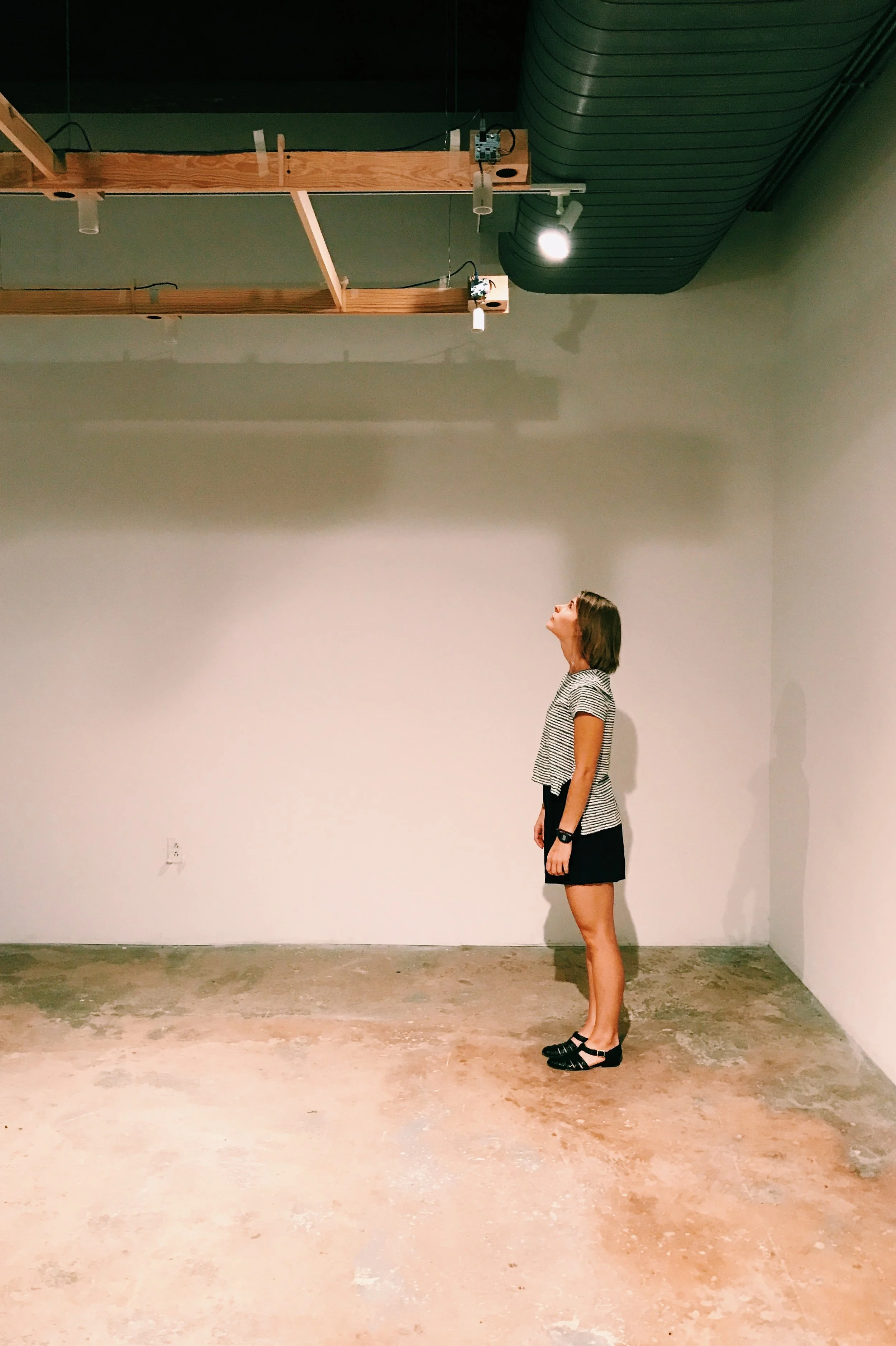
soundCARVING: a self-portrait by Dana Raymond w/ Robert Bailis
soundCARVING: a self-portrait
Dana Raymond with Robert Bilas
August 23 - October 7

soundCARVING: a self-portrait
Dana Raymond with Robert Bailis
August 23 - October 7
ARTIST STATEMENT
My artwork includes static and dynamic objects, installations, and performance. Underlying all my creations are systematic structures ranging from graphic to mechanical and musical to conceptual. The rhythmical expressions I achieve are the result of an imaginative merger of the rational and the irrational.
My main objective is to activate space. I fabricate forms, however, they play a supportive role to the empty volumes I energize and shape. My forms are as necessary as the sounds a musician creates in and around silence. My passions are ultimately derived from shaping the emptiness of spatial voids.
A secondary objective is to explore the relationship between part and whole. My intrigue with integral components, independent and interdependent, stems from my desire to conceptually understand a whole solely through its compositional parts.
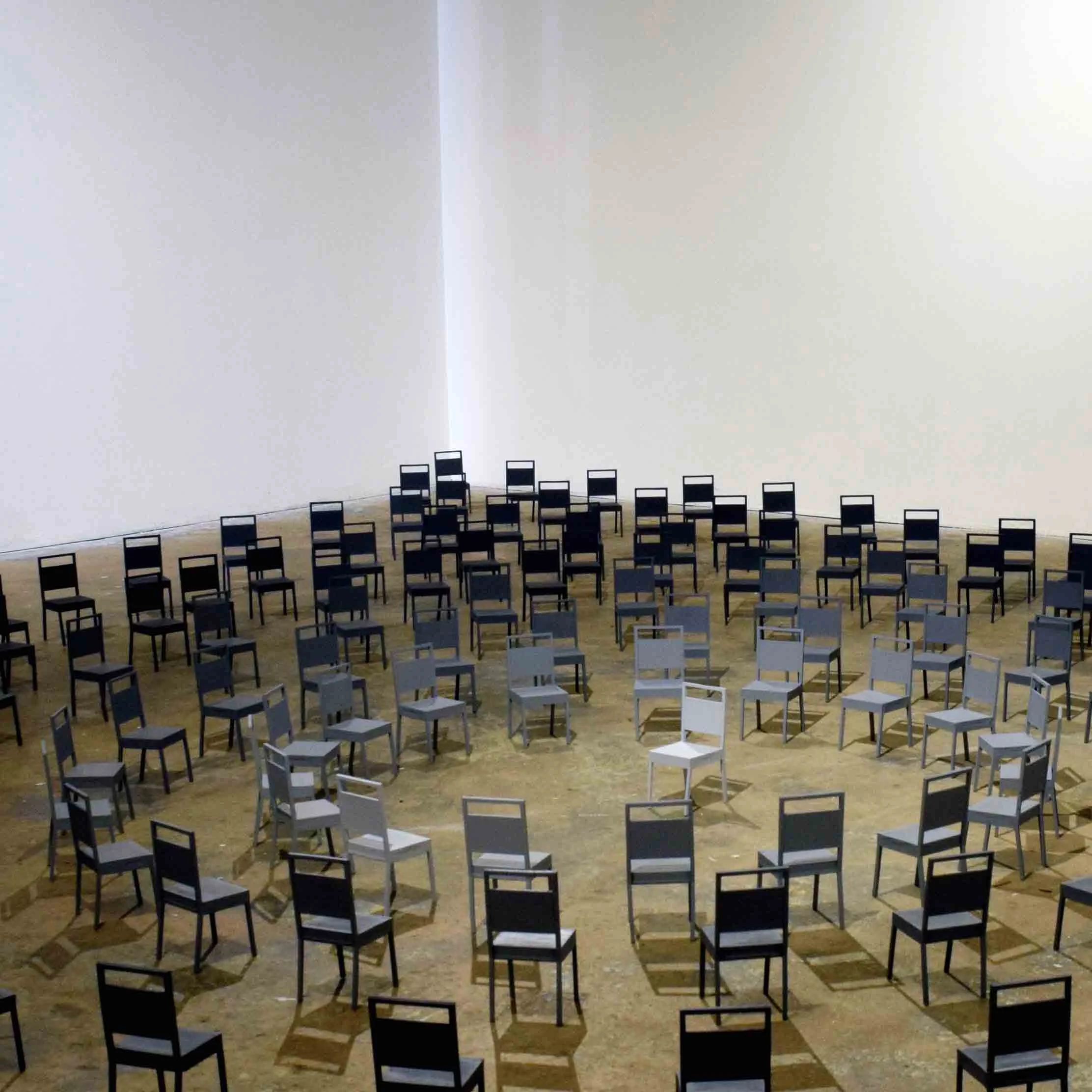
Collective Behavior by Maggie Evans
April 22 - June 3, 2017
Maggie Evans is an artist based in Savannah, Georgia. Using drawing, painting and site-specific installation her work examines human collective behavior and the hierarchies, homogeneity and social divisions that result.

Collective Behavior
Maggie Evans
ARTIST STATEMENT
Western art has long emphasized the uniqueness of each human being. But beneath these independent identities and myths of rugged individualism lies our deep, intrinsic desire to be part of a group. The group provides security and comfort, but it is also vulnerable to manipulative leadership, oppression of independent thought, and exclusion of those seen as “others.”
Using hundreds of simple, uniform chairs I create drawings and site-specific installations that examine this propensity towards collective behavior and its resulting power structures and homogeneity. Uniformity and repetition are more important than individuality in my work. Yet simultaneously, we are vaguely aware that each chair represents an individual. Though reminiscent of organized, ritualistic gatherings, the specific purpose of the chairs remains undefined and irrelevant, further emphasizing the sheer ubiquity of our collective behavior.
BIO
Maggie Evans is an artist based in Savannah, Georgia. Using drawing, painting and site-specific installation her work examines human collective behavior and the hierarchies, homogeneity and social divisions that result.
Maggie’s work has been included in over fifty national and international juried exhibitions and a number of art publications including New American Paintings and Manifest Gallery’s INPA 6. Artist residencies include The Hambidge Center for the Arts, Central Trak in Dallas, Texas and a full fellowship to the Vermont Studio Center. In 2011 she was awarded a Chinese Government Scholarship that granted her ten months to develop new work at the China Academy of Art in Hangzhou, China. She has had thirteen solo exhibitions and been invited to lecture on her work at a number of institutions including Indiana-Purdue University and the University of Texas, Dallas.
Maggie holds an MFA in Painting from the Savannah College of Art and Design (2008) where she is a part-time Professor of Foundation Studies. In addition to her work as an artist, she performs regularly as a professional jazz singer and bassist.
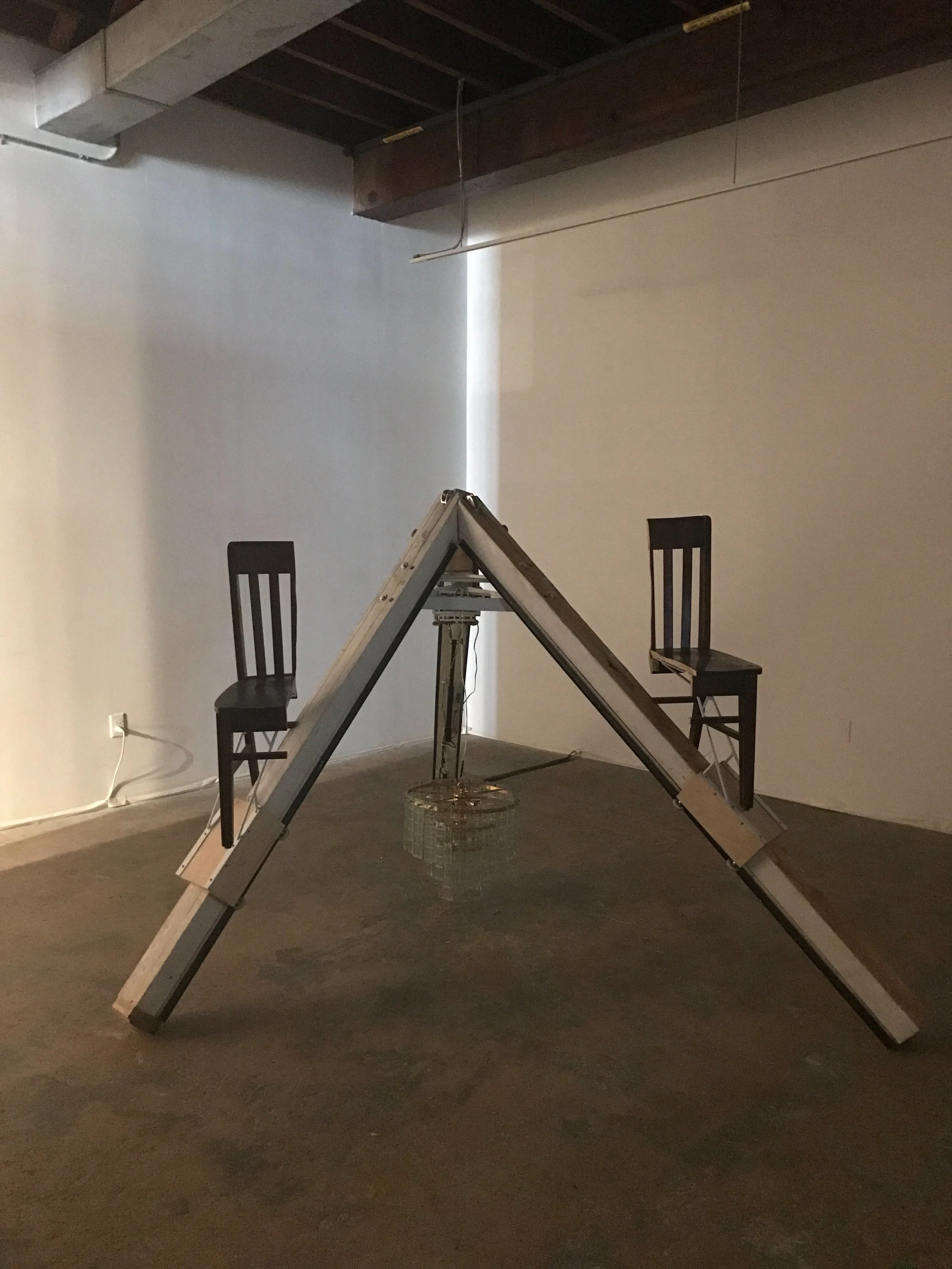
Brian Davis "Elevation V2"
December 21, 2016 - February 3, 2017
First Friday Receptions: January 6 & February 3, 2017 6-10pm
Brian Davis lives and works in Northern Virginia. Born in Ft. Walton Beach, Florida, Mr. Davis was raised in Guam and South Carolina. He has taught New Media and Sculpture at The George Washington University and American University. Mr. Davis has a B.F.A in General Studio from Winthrop University and an M.F.A in Sculpture from the University of Florida.
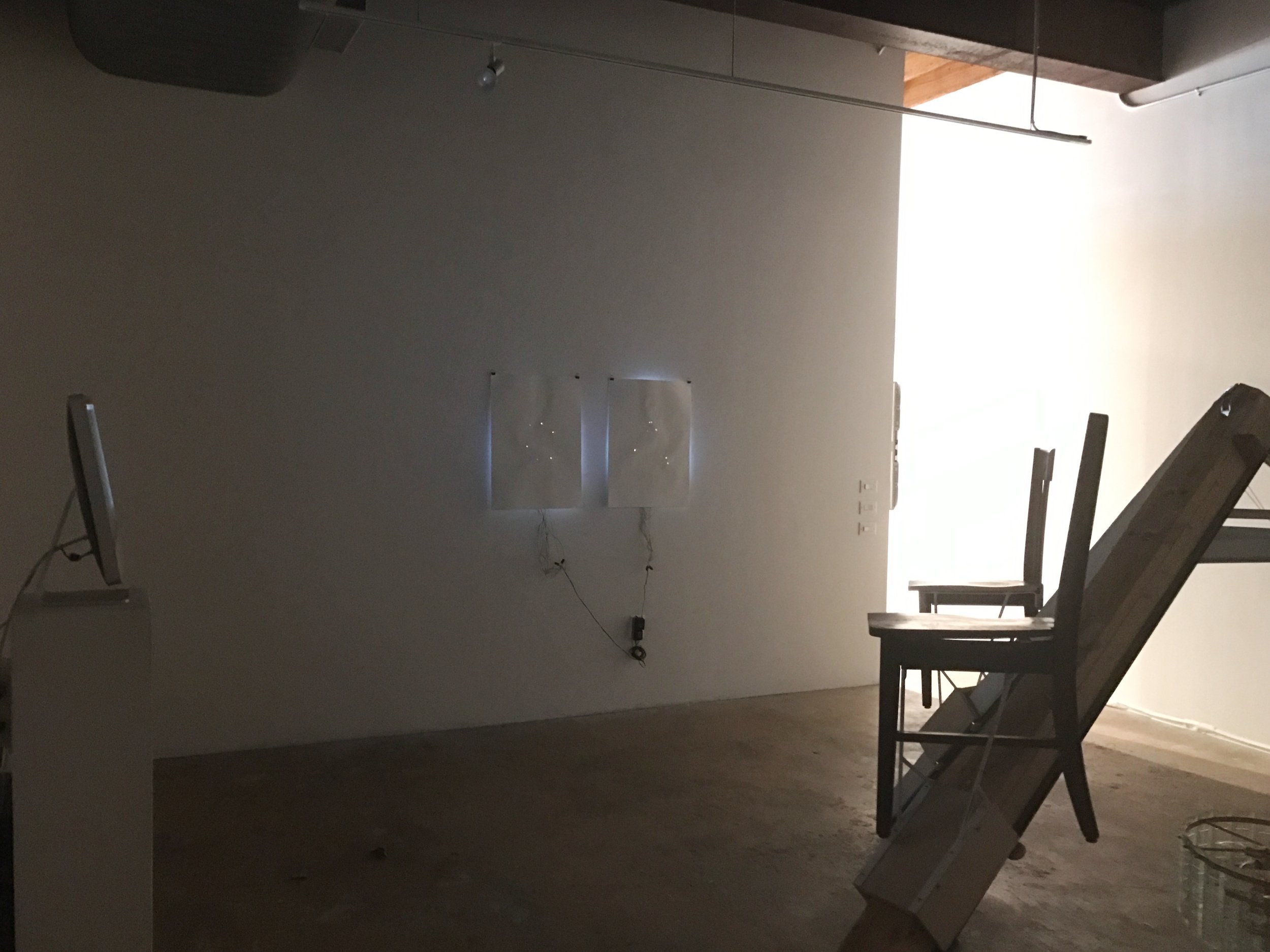
Elevation V2
December 21, 2016 - February 3, 2017
First Friday Receptions: January 13 (Do-Over) & February 3, 2017 6-10pm
Brian Davis lives and works in Northern Virginia. Born in Ft. Walton Beach, Florida, Mr. Davis was raised in Guam and South Carolina. He has taught New Media and Sculpture at The George Washington University and American University. Mr. Davis has a B.F.A in General Studio from Winthrop University and an M.F.A in Sculpture from the University of Florida.
From his roots of skateboarding and playing guitar for a punk band in the Deep South, he has embraced the D.I.Y. aesthetic. These social and creative endeavors, activities like organizing punk shows and collective ramp building, led to an interest in sculpture, video art, and to the current work that explores connectivity, interaction, and the possibilities of effecting change in the surrounding world.
Davis’ artistic practice is varied and experimental and includes elements of public sculpture, multimedia installation, and virtual applications. His work and research explores cross-discipline techniques and practices to exploit the medium’s connection to the viewer and the surrounding space. While focusing on viewer experience, Davis also strives to create a dialogue with the history of sculpture and video art.
Elevation V2 is a multipart installation consisting of a variety of interconnected elements. The central element is a tripod structure on which two segments if a wooden chair are propelled towards the ceiling of the gallery space. The mechanism that propels the chair segments upward is controlled by a gallery visitor who must stare intently at their own disappearing image in a computer monitor. Only while this person is actively interfacing with the monitor will the mechanism continue to operate; as soon as the connection is broken, the chair separates and is guided back to the gallery floor. While the work is active, the interfacing individual cannot view the active space behind them.
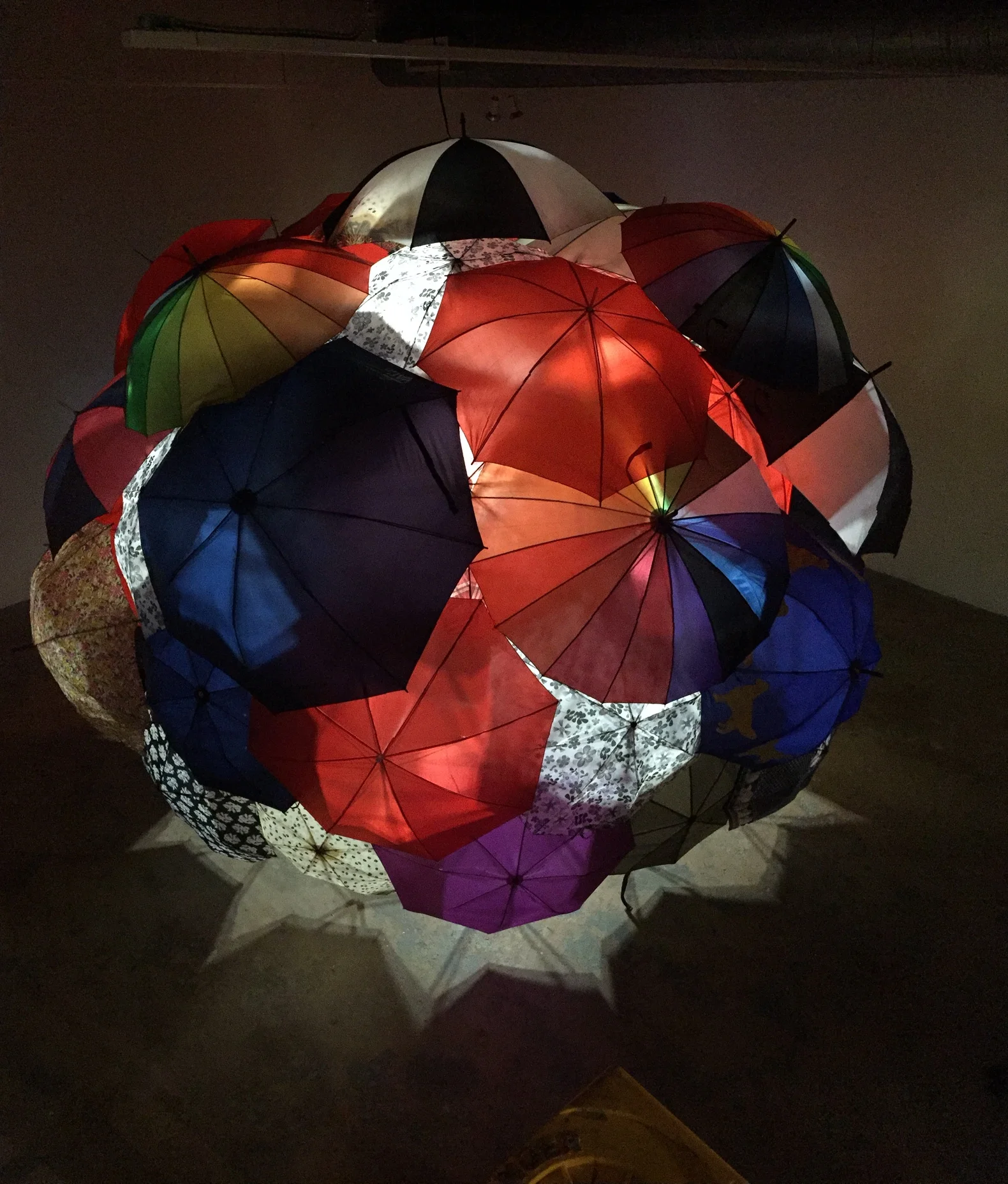
Evan Reed: Architecture for the Inclement
First Friday Receptions: November 4 & December 2, 6-10pm
Evan Reed was born in Honolulu, Hawaii and has lived throughout the United States. He develops forms by collecting and exploring the properties of material, many of which are discarded items, sourced from his community. The works pull from a variety of visual references including architectural forms, modes of transportation, and tools. His work is concerned with themes of Spirituality, History, Place, and Humor.

October 26 - December 3, 2016
The Cube
First Friday Receptions: November 4 & December 2, 6-10pm
Join us for Evan's artist talk Saturday, December 3 at 11am
THE EXHIBITION
Walking to the subway after a quick and violent early spring thunderstorm, I began to notice among the usual, post-deluge, debris a multitude of discarded umbrellas piled around garbage bins and left near the station entrance. Maybe it’s always this way after a storm but my attention focused in on what seemed an inordinate amount of the things. The scene made an impression on me and with it my scavenger impulse had me gathering up all the cast off umbrellas I could carry. Later I found most were damaged in some way by the strong winds that had accompanied the downpour. Riding in a crowded train I awkwardly juggled the armful of umbrellas. My soggy treasure presented me conspicuously and earned me looks from the other commuters.
That experience informed the creation of Architecture for the Inclement. I fantasized a structure made through the resourcefulness of one seeking basic protection from the elements. Rummaging the streets to create an eccentric, visionary nest. Several early attempts to create the form by sewing or lashing the umbrellas together proved to be weak or too impractical. Eventually my research for creating portable structures led me to plans for a geodesic dome structure. This construction technique was popularized by American theorist and designer Buckminster Fuller. Early explorations for using the geodesic design came to him during his time teaching at Black Mountain College. He later served as President of Synergetics Inc., a dome building construction firm based in Raleigh. Fuller was interested in designs that could benefit humanity. The geodesic dome was one solution for achieving a lightweight, strong, and affordable shelter. For my humble and pragmatic purposes the triangular grid-work allowed a flexible way to configure and attach umbrellas. The form is also easy to dismantle and store. The marriage of the umbrella, which is basically a handheld, pop-up shelter, with Fuller’s visionary geodesic structure made sense for the sculptures design but also feeds its meaning and interpretation.
THE ARTIST
Evan Reed was born in Honolulu, Hawaii and has lived throughout the United States. Currently he resides in Falls Church, Virginia and teaches sculpture and three-dimensional design at Georgetown University in Washington. D.C. He has exhibited in solo and group exhibitions nationally and internationally. His work is in several private collections and he has received grants to assist his studio work through Georgetown University, The Franz and Virginia Bader Foundation and the Fairfax County Commission for the Arts. His artwork focuses on creating objects that utilize the familiar but aim to transport the viewer beyond mundane experiences and encounters. He develops forms by collecting and exploring the properties of material, many of which are discarded items, sourced from his community. The works pull from a variety of visual references including architectural forms, modes of transportation, and tools. His work is concerned with themes of Spirituality, History, Place, and Humor.
The Cube/ call-for-art
The Cube is an experimental and installation space programmed by Visual Art Exchange and located within the main gallery at 309 West Martin Street. This exhibition opportunity affords emerging and professional artists with a physical space to explore ideas. The space, a roughly 20×20′ box, is equipped with several electrical outlets and track lighting. The ceiling is 14 feet high. Artists are juried into the space. Exhibits will run for roughly 2 months, with 2 public receptions. VAE is available to provide support in finding accommodations for artists and recruiting volunteer help for install. View previous Cube exhibitions!

ABOUT THE CUBE
The Cube is an experimental installation space programmed by VAE Raleigh and located within our gallery at 309 West Martin Street. This exhibition opportunity affords emerging and professional artists with a physical space to explore ideas. The space, roughly a 20×20′ box, is equipped with several electrical outlets and track lighting. The ceiling is 14 feet high. Exhibits will run for roughly 2 months, with 2 public receptions.
A stipend of $250 will be awarded to each show.
ELIGIBILITY
The Cube is open to all living artists, artist teams, and curators. Proposals must show promise and strong conceptual grounding. Preference will be given to experimental work, particularly installation, video and performance art. Applicants do NOT need to be VAE members, although the application fee is reduced for VAE members. VAE is available to provide support in finding accommodations for artists and recruiting volunteer help for install. View previous Cube exhibitions!
Become a member!
DEADLINE
The deadline for 2018-19 Cube proposals is 11:59 pm EST on February 15, 2018.
APPLICATION GUIDELINES
There are THREE different ways to apply for a Cube exhibit:
- As an individual artist
- As an artist team (2-4 artists working together)
- As a curator (a non-artist coordinating a show of 2+ artists' work)
The main difference between these three application types is the kind and amount of information we ask for. (The more artists involved, the more info we need.) But no matter what kind of application you're doing, your application must be completed and submitted by 11:59 pm on February 15, 2018
You will submit all of your application materials and pay your application fee here.
APPLICATION MATERIALS include artist/project statement, resume(s), proposed timeline, image inventory/work sample list, 5-10 samples of your work, and $10/15 application fee.
- Your artist’s/project statement should be no longer than one page and should describe your current work as well as any directions you plan to your work take in the future.
- Resumes should show prior exhibition history and your proposed timeline should be a very brief statement about your expected timing for your exhibition. Is this work currently complete? If not, when do you expect it to be completed? What months between June 2018 and July 2019 would you NOT be able to show?
- Your image inventory/work sample sheet should be a guide to the samples that accompany your application. Your inventory must contain the following information for each sample: the file name (“01_LASTNAME_TITLE.jpeg”), the piece’s title, the media/materials, dimensions, retail price (if applicable) and date of completion. Upload your inventory/work sample sheet as a .doc or .pdf.
Upload 5-10 samples* of your work**. All files should be named like so:01_LASTNAME_TITLE.jpg, 02_LASTNAME_TITLE.jpg, 03_LASTNAME_TITLE.mov, etc.
- Still images should be uploaded as jpegs, should be at least 1000px at their widest dimension, not to exceed 2MB per image. Follow the filename format for works as indicated above.
- Video samples should be edited to no longer than 2 minute excerpts. It is strongly preferred that video & audio artists submit their work online through clips or url addresses to online sharing formats like hulu, vimeo, youtube, or dropbox. Videos submitted as uploaded files should be submitted as Quicktime files whose width is no larger than 720px and file size is no larger than 10MB (as that is the largest file eligible for upload on our entry software). Please only submit video art or video documentation of an art piece that requires video to be fully experienced. Do not send video walk-throughs of static exhibitions or video slide shows. While web-hosted submissions are strongly preferred, video and audio samples can be submitted on CD if necessary. Please contact Kyle Hazard to make arrangements for CD delivery prior to February 15, 2018. Follow the filename format for works as indicated above.
- Audio: Audio should be submitted as separate MP3 files. Each track should be no longer than 2 minutes. Follow the filename format for works as indicated above.
- Web-based: Web-based work should be submitted as a URL listed in the work sample list. Please only submit web-based projects. A portfolio website that features audio/video art and still images will not be considered.
*Artists applying with still images only should send 5-10 jpegs. Artists applying with video only, should send 5 samples maximum. Artists applying with audio or web-based work only should apply with 5-10 samples. If you are sending a combination of file types, keep in mind that one video or audio file is equivalent to five jpegs and adjust your sample number accordingly.
Extra-submitted files will not be reviewed.
**If the work you are proposing to exhibit in the Cube is still currently in progress, no problem!
You can submit jpeg drawings of what you expect the work will be like, or you can rely solely on images of past work and your written narrative to describe the work you are proposing. It's your call! The Cube selection panel is interested in both the work you are applying to show and your past work.
Incomplete or inaccurately assembled applications will not be considered. Notifications of acceptance or rejection will be sent via email. Please update your contact information if anything changes before you receive notification.
NOTES FOR ARTIST TEAMS
Teams of up to FOUR artists can apply for exhibitions in the Cube. Artist team applications should describe the group's goals as well as the abilities of each group member. There must be one designated team contact who accepts responsibility for fielding questions about the application and project. In addition to the required items detailed above each team application must include:
- A project statement describing the work and goals of the collaboration as well as the individual contributions of all team members.
- 5-10 work samples OR 3-5 two-minute segments of audio and/or video (or appropriate combination of images video, audio, and web-based work-- see note in Part A). The work samples should include at least one example from each member of the group.
- A resume for each member of the group; grouped together and pasted into one text box.
NOTES FOR CURATORS
The Cube is a great place for curators to try out new ideas and bring interesting artist combinations together. Applying curators MUST have confirmed artist participation prior to submitting their exhibit proposals. In addition to the required items detailed above, each curatorial application must include:
- A curatorial statement describing the vision and goals of the proposed exhibit as well as the individual artists being included in the exhibit
- The curator's C.V. or resume
- ALL participating artists' C.V. or resumes
- 5-10 work samples OR 3-5 two-minute segments of audio and/or video (or appropriate combination of images video, audio and web-based work-- see note in Part A). The work samples should include at least one example from each member of the group.
_____________________________________________________________________________
- 5-10 work samples OR 3-5 two-minute segments of audio and/or video (or appropriate combination of images video, audio and web-based work-- see note in Part A). The work samples should include at least one example from each member of the group.
THE DETAILS
RECEPTIONS & ARTIST TALKS: Cube exhibits are up for two First Friday Gallery Walk receptions. Exhibiting artists are expected to attend both receptions if at all possible. Artists are encouraged to give a gallery talk or do an demonstration at some point during the duration of the exhibit. These talks are typically done during the second reception (for greatest attendance) but other arrangements can me made.
MONEY: The only fees associated with this exhibit are the initial application fees ($10 members / $15 non-members). VAE does extensive online marketing of its shows (including your own page on the VAE website), but does not print postcards. VAE cannot offer any financial support for Cube installations. You are certainly welcome to apply for grant funding to help you cover the costs associated with making your work, and if we can help you get money we will. Also, you are welcome to use any tools or technology (projectors, pedestals, etc) currently owned by and available at VAE. Accommodations can be arranged for artists coming from out of town if needed. (Please let staff know at least three months in advance)
SALES & COMMISSION: You do not have to offer saleable work in the Cube. Should you decide to, VAE earns 30% commission on the sales of members’ works, and 50% on sales of non-members’ works.
EXHIBIT INSTALLATION & MAINTENANCE: Artists are typically allotted 10 days to install their work. The installations must be fully completed by the Wednesday before the opening Friday reception. Gallery staff is happy to support you during the installation of your exhibit, but the bulk of the responsibility of installing your work is on you. VAE provides wall vinyl signage for each show. Any maintenance required during the duration of the exhibit (other than turning the space on and off) is also up to you. If the exhibition requires regular interaction (like turning a piece on and off morning and night) from gallery staff it is up to the artist to make certain that the components can be operated while standing on the floor and that there are written directions for operating the pieces. At the end of the exhibition, it is the artist's responsibility to return the space to its original state by painting/spackling/sweeping (or whatever is needed). VAE is happy to provide spackle, sandpaper, brushes, rollers, drop cloths, etc., but if extensive repainting (or repairs) is required the artist may be asked to contribute money to purchase supplies, or to put down a refundable deposit prior to installing.
APPLICATION EVALUATION: VAE staff and guest curators evaluate applications. Applicants will be notified via email by the end of March after the review of the status of their application.
ACCESSIBILITY: VAE’s gallery space is fully accessible and we strive to make the submission process accessible as well. We encourage anyone to enter our open call exhibitions. If you need any additional information or accommodations in order to enter this exhibition or become a VAE member, please email Brandon or call 919.256.6856 for assistance. Visit our accessibility page for more information.
Questions? Email Kyle!